


News and Events
Fire Detection and Alarm System Philippines: Complete Guide for Commercial Buildings
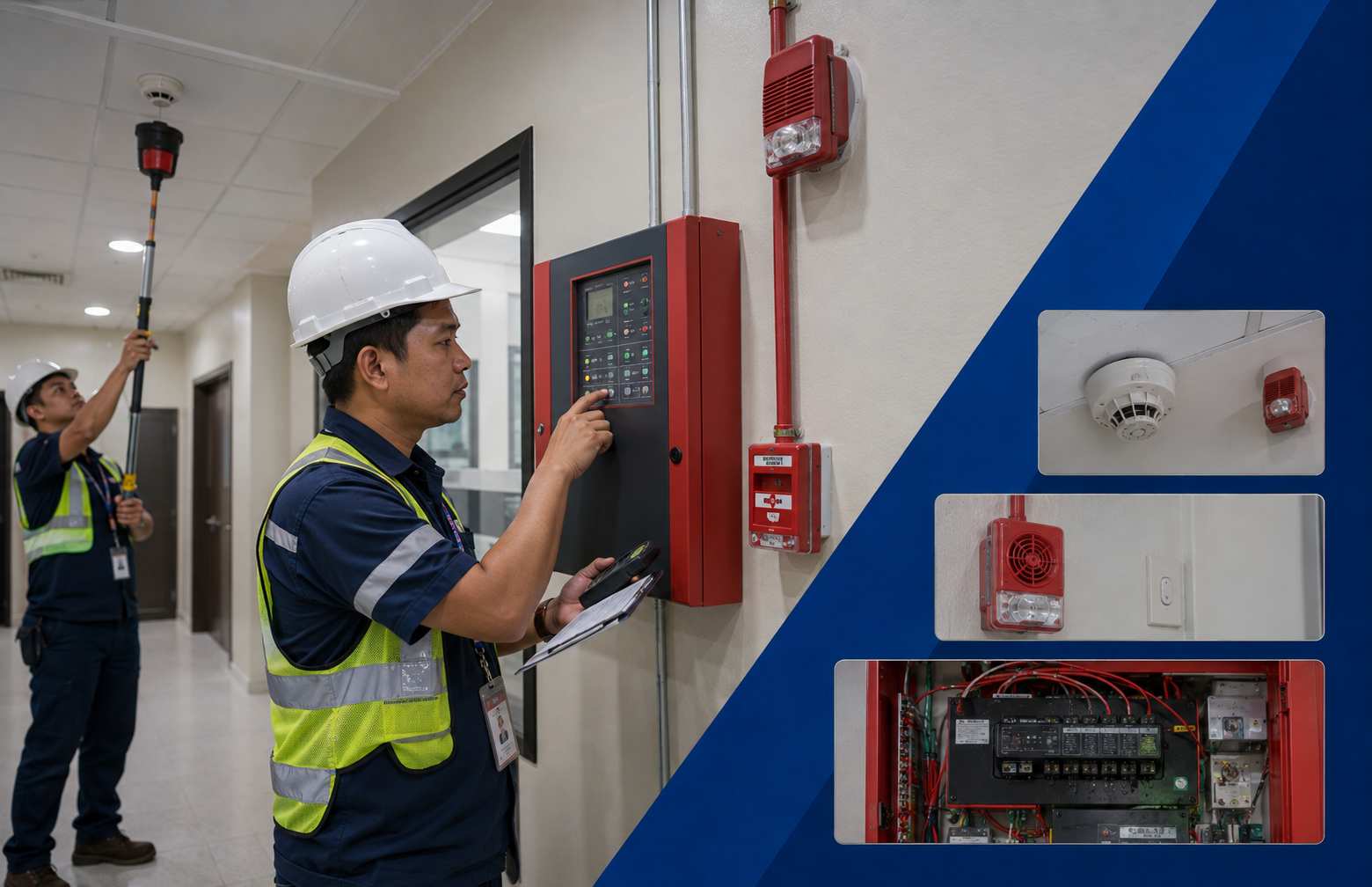
What Is a Fire Detection and Alarm System?
Fire Detection and Alarm System Philippines refers to a life-safety system designed to detect early indications of fire and provide warnings so building occupants can respond and evacuate when necessary. Commercial buildings such as offices, hospitals, hotels, schools, manufacturing plants, and warehouses can use these systems as part of their overall fire protection infrastructure.
A Fire Detection and Alarm System (FDAS) may include smoke detectors, heat detectors, manual pull stations, Fire Alarm Control Panels (FACP), horns, strobes, speakers, and other notification devices. These components work together to continuously monitor selected areas of a building for conditions associated with fire.
Depending on the building, an FDAS may also integrate with Building Management Systems, smoke management systems, elevators, emergency lighting, Access Control, and fire suppression systems.
Why Choose a Fire Detection and Alarm System?
Early detection is one of the most important functions of a Fire Detection and Alarm System Philippines. Smoke detectors, heat detectors, and other devices continuously monitor designated areas and initiate an alarm when configured fire conditions are detected.
Timely notification gives employees, customers, visitors, and other occupants an opportunity to follow established evacuation procedures. Early detection can also support a faster emergency response and help limit the potential spread of fire and resulting property damage.
Modern FDAS installations can also coordinate with other compatible life-safety and building systems. Depending on the facility design, this may include smoke control, fire suppression, emergency lighting, access control, elevators, and Building Management Systems.
How a Fire Detection and Alarm System Works
A Fire Detection and Alarm System begins with detection devices installed throughout designated areas of a facility. Smoke detectors respond to the presence of smoke, while heat detectors identify specific temperature conditions. Manual pull stations also allow occupants to initiate an alarm manually when they identify a fire emergency.
When a detector or manual station is activated, a signal is transmitted to the Fire Alarm Control Panel (FACP). The panel serves as the central controller and processes information received from connected devices.
Once an alarm condition is initiated, notification devices such as horns, sirens, speakers, and strobe lights can activate to alert building occupants.
Depending on the building design and system configuration, the FDAS may also interact with compatible systems such as smoke controls, magnetic door holders, elevators, emergency exits, fire suppression equipment, and monitoring services.
Fire Detection and Alarm System Safety & Trust
A Fire Detection and Alarm System should be properly designed, installed, tested, and maintained because its primary purpose is supporting life safety during a fire emergency.
Detector selection and placement are important. Smoke detectors may be appropriate for many occupied areas, while heat detectors may be selected for environments where smoke, steam, or other conditions could contribute to unwanted alarms. System design should consider the conditions and fire risks present in each area.
Regular inspection, testing, and preventive maintenance are also essential. Dirt, aging components, damaged wiring, depleted batteries, or equipment faults can affect system reliability over time.
Fire detection and alarm installations should also be planned according to applicable fire safety requirements, building codes, and relevant Philippine regulations.
Fire Detection and Alarm System Tips
• Select detection devices according to the conditions of each area.
• Position smoke and heat detectors according to the approved system design.
• Test detectors, control panels, notification devices, and power sources regularly.
• Investigate recurring false alarms instead of simply resetting the system.
• Keep detectors and other components properly maintained.
• Coordinate FDAS integration with other compatible life-safety systems.
• Maintain inspection, testing, and preventive maintenance records.
Detect Fire Conditions Before They Become Larger Emergencies
Commercial facilities contain people, equipment, property, and important business operations that can be placed at risk during a fire. A properly designed Fire Detection and Alarm System Philippines provides continuous monitoring and timely notification when configured fire conditions are detected.
Different facilities require different approaches depending on building size, occupancy, fire risks, existing infrastructure, and operational requirements. Conventional systems may provide zone-based identification, while addressable systems can identify the specific device that has initiated an alarm.
Proper system design, equipment selection, installation, testing, commissioning, and preventive maintenance can help maintain dependable fire detection throughout the facility.
Frequently Asked Questions
What is a Fire Detection and Alarm System?
Fire Detection and Alarm System (FDAS) is a life safety system that will detect the earliest indications of fire and provide immediate notification. Fire Detection and Alarm Systems use devices such as smoke detectors, heat detectors, manual pull stations, and alarm notification devices to ensure a safe evacuation and prevent the spread of fire.
What is the difference between a smoke detector and a heat detector?
Smoke Detector is a fire detecting device that reacts to the presence of smoke. Usually, it is installed in the offices and corridors and other occupied locations. Heat detector, on the other hand, reacts to a quick rise in temperature and is better suited for kitchens where there is the possibility of false alarms due to smoke/steam.
What is the difference between an addressable fire alarm and a conventional fire alarm?
Conventional fire alarm system can only identify the general area or zone where the fire alarm was activated. In contrast, the addressable fire alarm system will tell you which particular device caused the fire alarm to activate.
How often should a Fire Detection and Alarm System be inspected?
The Fire Detection and Alarm System needs to be checked and tested from time to time to operate efficiently and effectively. Maintenance allows detection of malfunctions and defects which might influence the effectiveness of the system when a fire hazard occurs.
Why is a Fire Detection and Alarm System important for commercial buildings?
Many people, valuables, and important processes are found within commercial buildings. The Fire Detection and Alarm System can provide an early warning for emergencies and ensure safe evacuation.
Get Your Fire Safety Assessment Today at Foxcon
Protect your commercial facility with a properly designed and maintained Fire Detection and Alarm System. Whether you need FDAS installation, testing and commissioning, preventive maintenance, or system upgrades, Foxcon Total Solutions Inc. is ready to support your fire safety requirements.
📞 Contact us today to discuss your fire detection and alarm requirements.
📍 Serving businesses in Cebu, Metro Manila, and nationwide.
🌐 Explore Foxcon’s solutions to learn more about our services.