


News and Events
Building Management System Philippines: Enhancing Building Efficiency with Smart Automation
What Is a Building Management System?
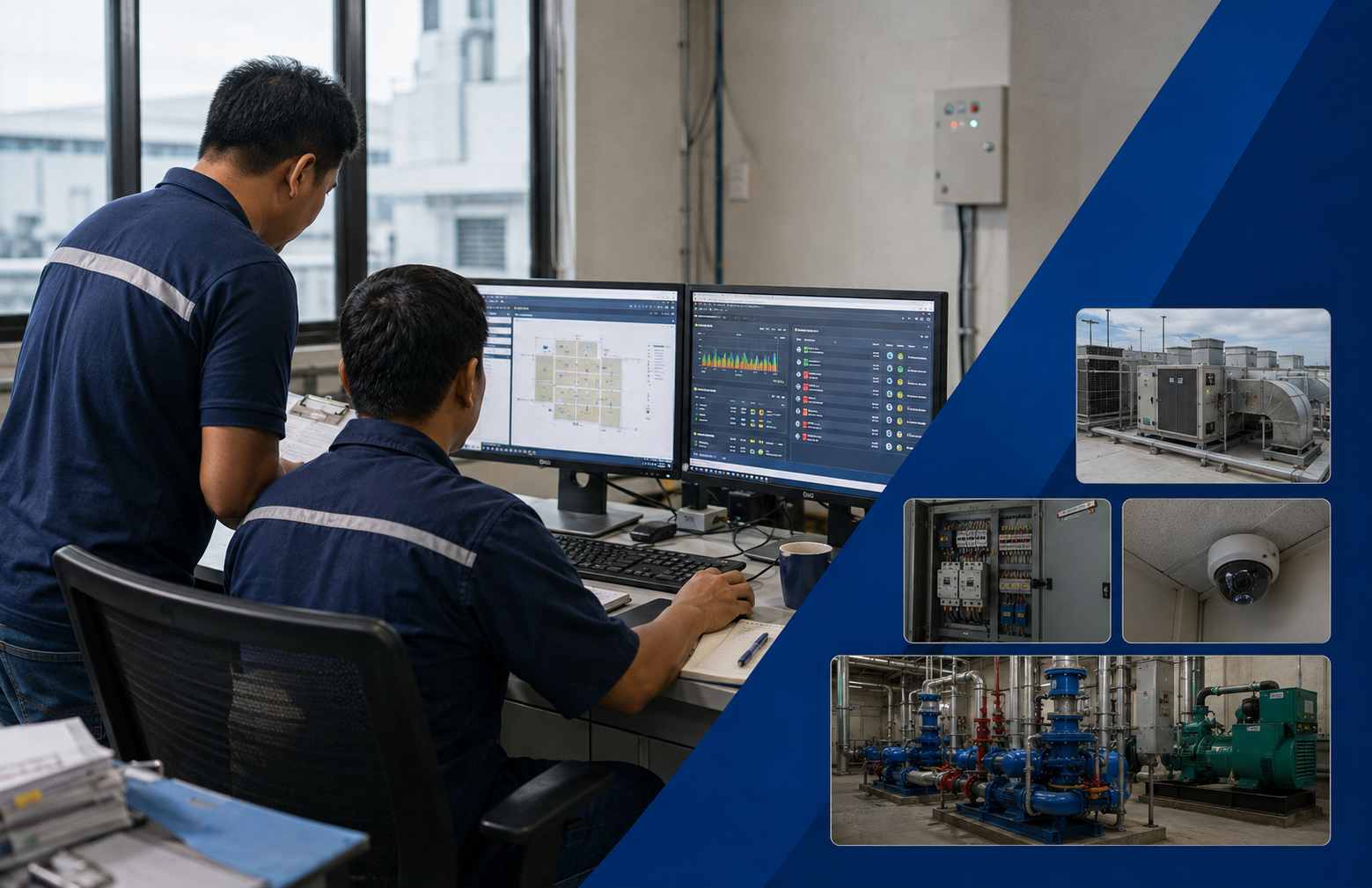
Building Management System Philippines refers to an automated control system used to monitor and manage multiple building systems through one centralized platform. Instead of operating HVAC, lighting, electrical systems, security, and other facility technologies separately, a BMS allows building operators to monitor and control compatible systems from one environment.
A Building Management System can support HVAC, lighting, electrical systems, Fire Detection and Alarm Systems, CCTV, Access Control, elevators, water pumps, generators, and auxiliary systems depending on the building and equipment compatibility.
Sensors and connected devices collect information from different areas of the facility and send that data to the BMS. This gives facility managers greater visibility into operating conditions and can help identify abnormal equipment behavior before it becomes a larger issue.
Why Choose a Building Management System?
Managing multiple building technologies separately can make daily operations more complicated. A Building Management System Philippines provides a centralized way to monitor and control selected systems, making facility management more organized.
A BMS can help operators monitor energy consumption, equipment status, environmental conditions, safety systems, and other building functions in real time. This can support more informed decisions and make it easier to identify areas that may require maintenance or operational adjustments.
Centralized control can also support occupant comfort by helping manage temperature, ventilation, humidity, and lighting according to the facility’s operating requirements. In addition, real-time monitoring can help identify developing equipment issues and support preventive maintenance planning.
How a Building Management System Works
A Building Management System begins by collecting information from sensors and connected devices installed throughout the facility. These devices may monitor temperature, humidity, lighting levels, air quality, occupancy, smoke detection, water levels, and equipment status.
The collected information is transmitted to compatible controllers, where it is compared with predefined operating parameters. The BMS then processes the data and determines whether adjustments are required.
The system may send commands to connected equipment, such as adjusting air-conditioning based on occupancy, controlling lighting schedules, managing ventilation, monitoring electrical conditions, or generating alerts when abnormal conditions are detected.
All supported information is then displayed through a centralized dashboard. Facility managers can review current conditions, historical data, equipment status, and performance information from one platform.
Building Management System Safety & Trust
A Building Management System should be planned carefully because it can interact with multiple mechanical, electrical, security, and auxiliary systems.
Compatibility between equipment from different manufacturers should be reviewed during the design stage, especially when different communication protocols or software platforms are involved. Existing facilities may also contain legacy equipment that requires careful integration with newer technologies.
System performance, energy usage, equipment status, software, and connected devices should be reviewed regularly. Preventive maintenance, inspections, system testing, and software servicing can help maintain dependable operation over time.
Foxcon Total Solutions Inc. can support BMS-related projects through Engineering and Design, Supply and Installation, System Integration, Testing and Commissioning, Preventive Maintenance, and technical support.
Building Management System Tips
• Determine the functional requirements of the building before system design.
• Select technologies that can support future expansion and integration.
• Use compatible communication protocols where possible.
• Monitor system performance and equipment conditions regularly.
• Review energy consumption and historical operating data.
• Include preventive maintenance in the long-term system plan.
• Keep system documentation updated after modifications or upgrades.
Take Greater Control of Building Operations
A properly planned Building Management System Philippines can help organizations centralize the monitoring and control of multiple building technologies while supporting more organized facility operations.
From HVAC and lighting to electrical systems, security, life-safety technologies, and auxiliary systems, a BMS can provide facility managers with greater visibility into building performance and equipment conditions.
With proper planning, installation, integration, monitoring, and maintenance, organizations can use Building Management Systems to support efficient operations, occupant comfort, preventive maintenance, and long-term facility management.
Frequently Asked Questions
What is Building Management System?
Building Management System (BMS) refers to a computer-based automation system which manages and monitors multiple building systems using a unified system. The facility manager can therefore be able to monitor and manage equipment like HVAC, lighting, electrical systems, fire detection, security and many others in one computer system.
What kinds of systems does Building Management System control?
Building Management Systems can monitor and control a wide range of mechanical, electrical and auxiliary systems in the building. Some of the common systems managed by Building Management Systems include HVAC, lighting, fire detection and alarm systems, CCTV, access control, elevators, water pumps, generators and energy management systems.
Can an existing building have a Building Management System?
Yes. Building Management Systems can be installed in newly built as well as existing buildings. Even existing facilities can utilize a Building Management System by integrating old equipment with new technologies.
Why is a Building Management System significant?
Building management system enables energy savings, better building security, higher comfort levels of occupants and equipment efficiency. It also makes it easier for facility managers to manage their building systems and determine maintenance needs before equipment breakdowns happen.
Is it worth investing in a Building Management System?
Yes. While the installation of a Building Management System involves some capital expenditure, it enables energy savings, better maintenance planning, increased life span of equipment and reduced operating costs.
Act Now: Improve Your Building Management System
Take greater control of your facility with a properly planned Building Management System. Whether you need system design, integration, installation, testing, or upgrades, Foxcon Total Solutions Inc. can help develop a solution suited to your building requirements.
📞 Contact us today to discuss your building management requirements.
📍 Serving businesses in Cebu, Metro Manila, and nationwide.
🌐 Explore Foxcon’s solutions to learn more about our services.