


News and Events
Fire Suppression Systems Philippines: Protecting Critical Areas With the Right Suppression Technology
What Are Fire Suppression Systems?
Fire Suppression Systems Philippines are specialized fire protection systems designed to control or extinguish a fire using an agent selected for the type of hazard and the environment being protected.
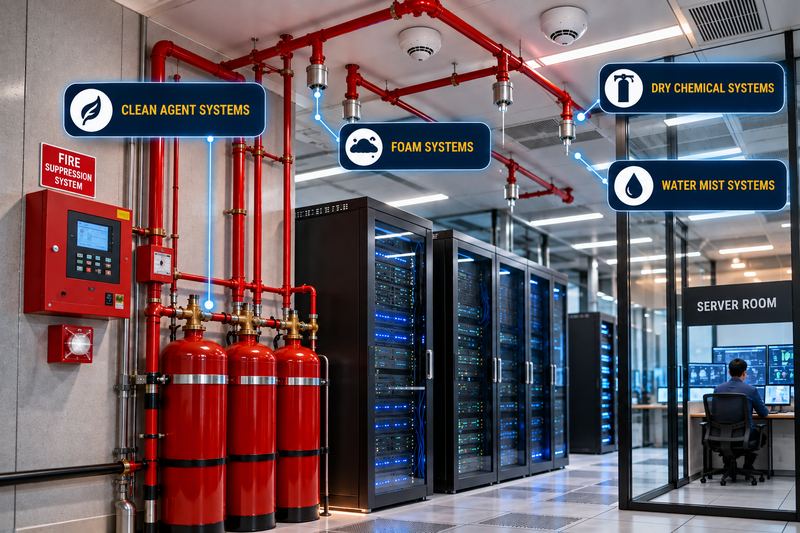
Unlike standard sprinkler systems that rely mainly on water, fire suppression systems may use clean agents, inert gases, carbon dioxide, foam, dry chemicals, or water mist. The correct choice depends on the materials present, the equipment inside the room, occupancy conditions, and the type of fire risk.
These systems are commonly used in areas where conventional water-based protection may not be appropriate or where sensitive equipment requires additional protection. Examples include server rooms, data centers, electrical rooms, control rooms, telecommunications facilities, laboratories, and certain industrial spaces.
Foxcon Total Solutions, Inc. provides Fire Suppression Systems for commercial and industrial facilities that require carefully planned protection for critical equipment and higher-risk areas.
Why Choose Fire Suppression Systems?
Not every fire should be handled in the same way. A server room filled with electronic equipment has different risks from a commercial kitchen, fuel storage area, manufacturing process, or ordinary office space. Using the wrong suppression method can reduce effectiveness or create additional damage.
Fire Suppression Systems allow the protection method to be selected according to the specific hazard. Clean agent systems, for example, are often considered for areas containing sensitive electronics because the agent can suppress a fire without leaving the residue associated with some dry chemical systems.
Foam systems may be more appropriate for certain flammable-liquid hazards, while dry chemical systems are commonly used where rapid suppression of specific fire classes is required. Water mist systems use very small water droplets and can control heat while using less water than some conventional water-based approaches, though suitability still depends on the application.
The important point is that the suppression agent should follow the hazard assessment rather than simply choosing one technology for every room.
How Fire Suppression Systems Work
A Fire Suppression System usually combines detection, control, and discharge components. Detection devices monitor the protected area for signs of fire. Depending on the system, this may include smoke, heat, flame, or other suitable detection technologies.
When the required detection conditions are met, signals are sent to the control system. The system can then activate alarms, initiate programmed shutdowns or control sequences, and prepare the suppression system for discharge.
The suppression agent is released through piping and nozzles positioned throughout the protected area. How the agent controls the fire depends on the system type. Some agents reduce heat, some interfere with the combustion process, and others reduce the concentration of oxygen available to sustain the fire.
Certain systems may also interface with ventilation, fire alarm, access control, or building management functions so that related equipment responds appropriately during an emergency. These sequences must be designed carefully because automatic discharge systems can introduce their own safety considerations.
Fire Suppression Systems Safety & Trust
The first question in a suppression project should be, “What exactly are we protecting, and what can burn here?” The answer determines much of the system design.
A clean agent system that works well for electronic equipment may not be appropriate for every industrial hazard. A system designed for an unoccupied equipment enclosure also has different safety requirements from one protecting a normally occupied room. Room conditions matter, too. Some gaseous suppression systems depend on maintaining the required agent concentration long enough to control the fire. Openings, ventilation systems, and poor room integrity can affect performance.
Discharge alarms, manual controls, warning devices, shutdown sequences, and evacuation procedures must also be considered where applicable. Suppression systems should therefore be designed, installed, inspected, and maintained according to applicable fire safety requirements, the selected system’s design criteria, and the manufacturer’s instructions.
Foxcon Total Solutions, Inc. can support fire suppression projects through assessment, system planning, installation, integration, testing, commissioning, inspection, preventive maintenance, and technical support.
Fire Suppression Systems Tips
-
Identify the fire hazard first. Determine what materials, equipment, and processes are present before selecting an agent.
-
Consider equipment sensitivity. Evaluate whether water, residue, or other suppression effects could damage critical equipment.
-
Review occupancy conditions. Some suppression technologies require additional precautions in occupied spaces.
-
Check room integrity. Enclosed gaseous systems may depend on maintaining the correct concentration after discharge.
-
Coordinate with the fire alarm system. Detection, alarm, discharge, and shutdown sequences should work together correctly.
-
Review ventilation controls. HVAC operation can affect certain suppression systems during a fire event.
-
Keep nozzles and discharge paths clear. Changes to furniture, equipment, or room layouts should not obstruct system performance.
-
Inspect cylinders and system components regularly. Agent quantity, pressure, valves, piping, detectors, and control equipment need periodic checks.
-
Train personnel on alarms and emergency procedures. Employees should understand what to do before, during, and after system activation.
Choose the Suppression Agent Based on the Hazard, Not the Room Name
Two rooms can both be called “server rooms” and still require different protection strategies. One may contain a small rack with network equipment, while another may contain multiple server cabinets, UPS batteries, electrical distribution equipment, and higher heat loads.
The same applies to industrial spaces. A control room, electrical room, production area, and flammable-liquid storage room may all contain valuable equipment, but their fire hazards are different.
That means the first step should not be choosing between clean agent, foam, dry chemical, or water mist. The first step is understanding the fuel, ignition sources, equipment sensitivity, occupancy, room construction, ventilation, and operational priorities.
From there, the suppression method can be matched to the actual risk. This approach helps avoid two common mistakes: installing a system that is unnecessarily complex or selecting one that does not adequately address the hazard it is supposed to protect.
Frequently Asked Questions
What is a Fire Suppression System?
A Fire Suppression System is a fire protection system designed to control or extinguish a fire using an appropriate suppression agent such as clean agent, gas, foam, dry chemical, or water mist.
How is a Fire Suppression System different from a fire sprinkler system?
A conventional sprinkler system mainly uses water. Fire Suppression Systems may use other agents when the hazard, equipment, or operating environment requires a different approach.
Which facilities use Fire Suppression Systems?
They are commonly used in server rooms, data centers, electrical rooms, telecommunications facilities, control rooms, laboratories, manufacturing areas, and other spaces with specialized fire risks.
What is a clean agent fire suppression system?
A clean agent system uses a gaseous suppression agent that does not leave significant residue after discharge. These systems are often considered for electronic and other sensitive equipment, subject to proper system design and safety requirements.
Can Fire Suppression Systems integrate with other building technologies?
Yes. Depending on the design, they can interface with Fire Detection and Alarm Systems, HVAC controls, Access Control Systems, emergency communication, and Building Management Systems.
Does every critical room need the same type of suppression system?
No. The correct system depends on the fire hazard, occupancy, equipment, room conditions, and applicable protection requirements.
Why is preventive maintenance important for Fire Suppression Systems?
Routine inspections help verify agent quantity or pressure, detectors, control panels, piping, nozzles, alarms, and discharge mechanisms so the system is more likely to operate correctly when needed.
Safeguard High-Risk Areas With Proper Suppression Systems
Protect critical spaces with properly planned Fire Suppression Systems. From system assessment and equipment planning to installation, integration, testing, commissioning, and maintenance, Foxcon Total Solutions, Inc. can help support your fire protection requirements.
📞 Contact us today to discuss your fire suppression needs.
📍 Serving businesses in Cebu, Metro Manila, and nationwide.
🌐 Explore Foxcon’s solutions to learn more about our services.
References
1. CLM Fireproofing – What Is a Fire Suppression System?
https://clmfireproofing.com/what-is-a-fire-suppression-system/
2. Firetrace – Fire Suppression Systems
https://www.firetrace.com/fire-suppression-systems
3. SE Group Philippines – Types of Fire Suppression Systems
https://www.segroup.com.ph/types-of-fire-suppression-systems/
4. Fire Rover – Types of Fire Suppression Systems
https://firerover.com/resources/7-types-of-fire-suppression-systems-that-every-business-should-know/
5. TVF – What Are Fire Suppression Systems and Why Are They Important?
https://www.tvfltd.co.uk/latest-news/what-are-fire-suppression-systems-and-why-are-they-important/