


News and Events
Structured Cabling Systems Philippines: Building Reliable Network Infrastructure for Modern Businesses
What Are Structured Cabling Systems?
Structured Cabling Systems Philippines provide the organized physical network that connects computers, servers, wireless access points, IP phones, CCTV cameras, Access Control Systems, and other devices used across a facility.
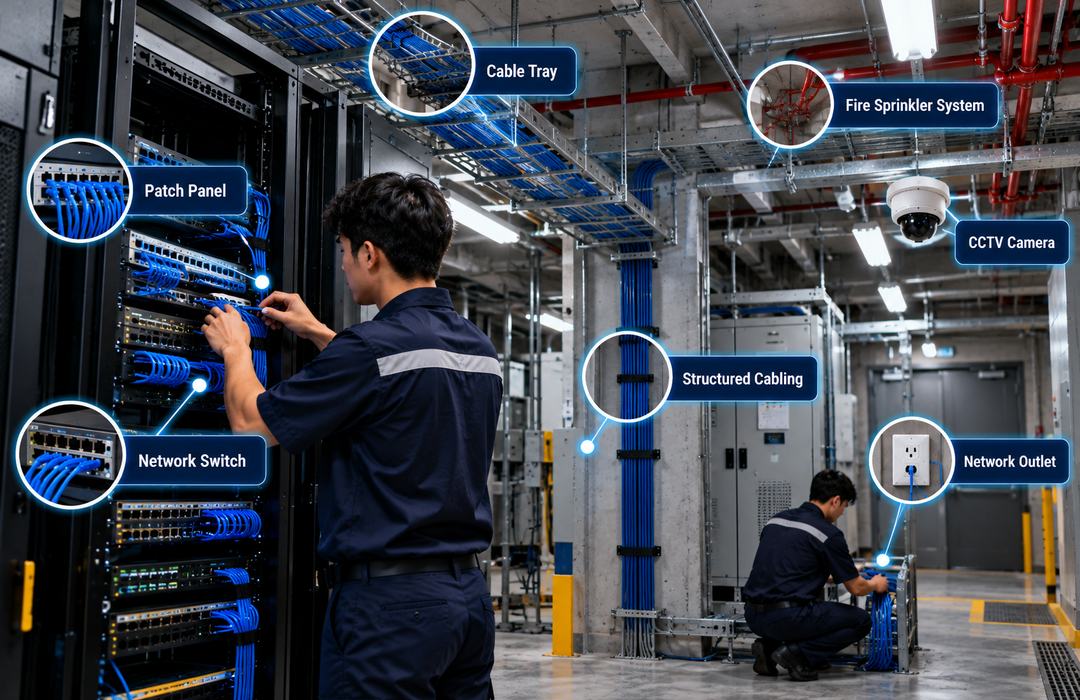
Instead of running separate cables without a clear structure, structured cabling uses planned pathways, patch panels, racks, outlets, and standardized cable runs. This makes the network easier to manage and provides a more organized way to support voice, data, video, and fiber connections.
A structured setup can use copper cabling, fiber optic cabling, or both, depending on distance, bandwidth, and equipment requirements. These systems can support voice, data, AV, and fiber optic connections as part of a commercial network infrastructure.
Foxcon Total Solutions, Inc. provides Structured Cabling Systems for offices, industrial facilities, schools, healthcare facilities, retail spaces, data centers, and other commercial environments that depend on stable network connectivity.
Why Choose Structured Cabling Systems?
Network problems are not always caused by switches, routers, or internet service. Poor cable routing, damaged connectors, unclear labeling, and poorly planned pathways can make even reliable network equipment difficult to maintain.
A properly designed Structured Cabling System gives technical teams a clear layout to work with. Each connection can be traced from the user or device back to the patch panel and network equipment, making moves, repairs, and upgrades easier.
Structured cabling is also useful when a business expands. New workstations, cameras, phones, access points, or other devices can be added more easily when the original infrastructure includes spare capacity and organized pathways.
This becomes especially important as more building technologies connect to the network. CCTV, Wi-Fi, VoIP, Access Control, AV systems, and other IP-based equipment may all depend on the same underlying cabling infrastructure.
How Structured Cabling Systems Work
A typical setup begins in a telecommunications room, server room, or other centralized equipment area. Network switches and patch panels are installed in racks, and individual cable runs extend from these locations to outlets or connected devices throughout the building.
Copper cabling may be used for workstation, phone, camera, and access point connections, while fiber optic cabling is often used for backbone links, longer distances, or connections between different floors and buildings.
At the rack, cables are terminated and organized through patch panels. Short patch cords then connect the required ports to switches or other network equipment. This arrangement makes it easier to change a network connection without disturbing the permanent cable run.
Each connection should also be clearly labeled and documented so technicians can quickly identify where a cable starts, where it ends, and what equipment it supports.
Structured Cabling Systems Safety & Trust
Good structured cabling is about more than keeping racks organized. Cable routes, support, termination, testing, and separation from electrical infrastructure can all affect long-term performance and maintenance.
The cable type should match the actual requirements of the network. Cat5e, Cat6, Cat6A, fiber optic, and other cabling options have different capabilities, so selection should be based on bandwidth, transmission distance, equipment, and future requirements rather than simply choosing the highest category available.
Testing after installation is also important. It helps confirm that cable runs, terminations, and connections meet the intended performance requirements before the network is handed over for everyday use. Cables, connectors, racks, and patch panels should remain accessible for inspection. Clear labeling and updated documentation can save considerable time when problems need to be traced later.
Foxcon Total Solutions, Inc. can support structured cabling projects through planning, installation, fiber and copper cabling, testing, certification, network integration, and technical support.
Structured Cabling Systems Tips
-
Plan cabling around actual device locations instead of adding outlets without a clear purpose.
-
Leave spare capacity in racks, pathways, and patch panels when future expansion is likely.
-
Label both ends of every permanent cable run clearly.
-
Keep network documentation updated whenever ports or equipment are changed.
-
Select copper or fiber based on distance, bandwidth, and equipment requirements.
-
Avoid overcrowding cable pathways or racks because this can make maintenance more difficult.
-
Test and certify installed cable runs before final turnover.
-
Inspect patch cords, connectors, racks, and pathways regularly for physical damage or poor organization.
Make Future Network Changes Easier From the Start
The value of structured cabling often becomes clearer after the initial installation.
When a company adds employees, moves departments, installs additional cameras, expands Wi-Fi coverage, or replaces network equipment, an organized cabling system makes those changes easier to manage. A poorly documented network can turn a simple change into hours of cable tracing and troubleshooting.
Structured cabling requires proper planning, installation, testing, certification, and maintenance because the network needs to remain organized and manageable after the initial installation is complete.
A professional site assessment can identify cable routes, telecommunications rooms, rack requirements, backbone connections, device locations, and available capacity before work begins. This planning helps create infrastructure that supports current network requirements without making future expansion unnecessarily difficult.
Frequently Asked Questions
What is a Structured Cabling System?
A Structured Cabling System is an organized network infrastructure that supports voice, data, video, and other communication services through a planned cabling framework. It serves as the foundation for connecting IT equipment and building technologies.
What are the benefits of Structured Cabling Systems?
Structured Cabling Systems can improve network reliability, simplify maintenance, support future expansion, and provide a more organized infrastructure for managing communication and connected technologies.
What types of cables are used in Structured Cabling Systems?
Structured Cabling Systems commonly use copper cables such as Cat5e, Cat6, and Cat6A, as well as fiber optic cables. The appropriate cable type depends on bandwidth requirements, transmission distance, equipment, and the specific needs of the facility.
Which facilities benefit from Structured Cabling Systems?
Structured Cabling Systems are commonly used in office buildings, hospitals, schools, hotels, manufacturing facilities, warehouses, retail establishments, government buildings, and data centers that require reliable communication infrastructure.
Can Structured Cabling support other building systems?
Yes. Structured Cabling Systems can support CCTV, Access Control Systems, Building Management Systems (BMS), Audio Visual Solutions, VoIP telephony, wireless networks, and other IP-based technologies through an organized network infrastructure.
Why is regular maintenance important for Structured Cabling Systems?
Routine inspections can help identify damaged cables, loose connections, labeling issues, and other conditions that may affect network performance. Preventive maintenance also helps keep the infrastructure organized and identify issues before they cause larger network problems.
Support Better Connectivity With a Stronger Network Foundation
Support reliable business connectivity with properly designed Structured Cabling Systems. Whether you need new cabling infrastructure, network expansion, fiber connectivity, testing, certification, or system upgrades, Foxcon Total Solutions, Inc. can help build an organized cabling environment for your facility.
📞 Contact us today to discuss your structured cabling requirements.
📍 Serving businesses in Cebu, Metro Manila, and nationwide.
🌐 Explore Foxcon’s solutions to learn more about our services.
References
-
IPSYSTEMS, Inc. – Professional Structured Cabling Services
https://ipsystems.ph/structured-cabling/ -
CloudConsole – IT Solutions and Structured Cabling
https://cloudconsole.ph/ -
Structured Cabling Philippines – Structured Cabling Services
https://structuredcablingph.com/ -
Kital Philippines – Structured Cabling Solutions
https://www.kital.com.ph/structured-cabling/ -
Techcore Philippines – Structured Cabling Installation
https://www.techcore.com.ph/structured-cabling-installation