


News and Events
Network Infrastructure Solutions Philippines: Building Reliable Connectivity for Modern Businesses
What Are Network Infrastructure Solutions?
Network Infrastructure Solutions Philippines provide the systems that allow people, devices, applications, and building technologies to communicate across a business network. This includes the physical connections inside the facility as well as the equipment responsible for directing, distributing, and protecting network traffic.
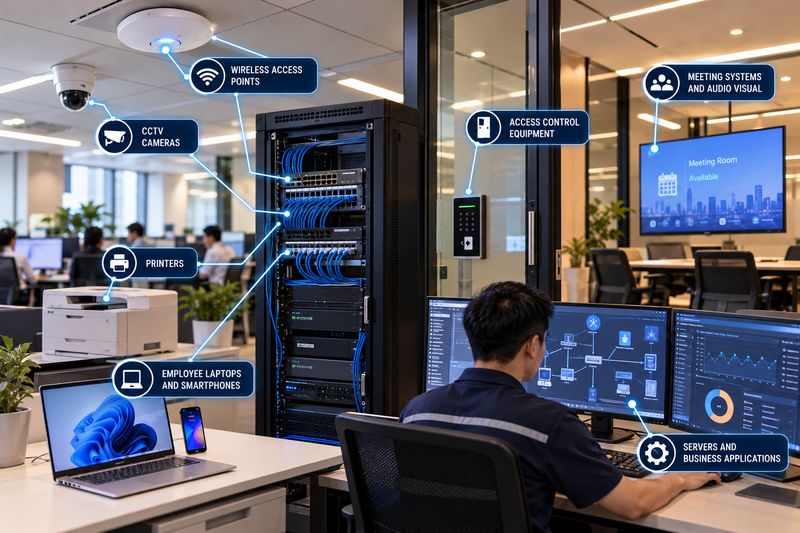
A typical business network may include routers, switches, wireless access points, structured cabling, fiber optic links, firewalls, network cabinets, servers, and monitoring tools. Wired and wireless infrastructure can support everything from employee computers and IP phones to CCTV cameras, Access Control Systems, Audio Visual equipment, and cloud-based applications.
The right setup depends on how the organization operates. A small office may only need dependable wired and wireless access, while a company with several floors, branches, warehouses, or high-volume applications may require a more complex network with additional capacity, backup connections, and centralized monitoring.
Foxcon Total Solutions, Inc. provides Network Infrastructure Solutions for offices, industrial facilities, educational institutions, healthcare facilities, retail establishments, and other organizations that depend on consistent business connectivity.
Why Choose Network Infrastructure Solutions?
A network problem can affect much more than internet access. Employees may lose access to shared files, cloud applications, IP phones, printers, cameras, meeting systems, and other tools they use throughout the day.
A properly planned Network Infrastructure Solution reduces this risk by matching the equipment and network design to the number of users, devices, locations, and applications the business needs to support.
Network planning also matters when an organization grows. Adding another department, branch office, wireless area, surveillance system, or cloud service can place additional demand on infrastructure that was originally designed for a much smaller operation. A network assessment can help identify these limitations before expansion begins.
For businesses operating from several locations, network infrastructure can also include technologies designed to connect branches and manage traffic between them. Depending on the requirements, these may include SD-WAN, wired and wireless networking, network load balancing, and other connectivity technologies.
How Network Infrastructure Solutions Work
The process should begin with an assessment of the existing environment. The number of employees, connected devices, applications, building layout, internet connections, wireless requirements, and plans for expansion all affect the network design.
Routers manage communication between different networks and internet connections, while switches connect devices within the local network. Wireless access points provide Wi-Fi coverage, and structured cabling or fiber optic infrastructure carries data between network equipment and connected locations.
The equipment must then be configured so business traffic travels where it needs to go without giving every device unrestricted access to other parts of the network. Depending on the organization, separate network areas may be created for employees, guests, security systems, servers, or other equipment.
After deployment, monitoring tools can provide information about network traffic, connected equipment, availability, and potential performance problems. Network monitoring can help technical teams identify issues before they affect a larger number of users.
Network Infrastructure Solutions Safety & Trust
A dependable network should not only be fast. It should also be designed so that a problem in one area does not unnecessarily expose or disrupt the rest of the organization.
Network security should therefore be considered during the design stage. Firewalls, controlled access, proper device configuration, software updates, and network separation can help protect sensitive systems and information.
Backup connections may also be appropriate for operations that cannot afford to depend on a single connection or device. Redundant infrastructure can help maintain connectivity when a primary network component or connection becomes unavailable. Physical infrastructure matters as well. Network cabinets, patch panels, cabling, fiber connections, power, cooling, and equipment rooms should remain organized and accessible for troubleshooting and maintenance.
Foxcon Total Solutions, Inc. can support network projects through assessment, design, structured cabling, equipment installation, configuration, integration, testing, monitoring, and technical support.
Network Infrastructure Solutions Tips
-
Count users and connected devices before selecting network equipment.
-
Plan for expected growth instead of designing only for today’s network traffic.
-
Check wireless coverage based on the actual building layout rather than simply adding access points where convenient.
-
Separate guest, security, and critical business traffic where the network design requires it.
-
Keep routers, switches, access points, and other network equipment updated.
-
Label network ports, patch panels, cabinets, and cable routes clearly.
-
Monitor network performance so recurring congestion or equipment problems can be investigated early.
-
Review network capacity before adding large numbers of cameras, users, cloud applications, or other connected technologies.
-
Consider backup connections or equipment where network downtime would seriously affect operations.
Design the Network Around How the Business Actually Works
Buying faster switches or adding more access points does not automatically solve a network problem. Sometimes the real issue is poor wireless coverage. In another facility, it may be an overloaded connection, aging cabling, equipment that has reached capacity, or a network that was never designed for the number of devices now connected to it.
That is why a network assessment should look at more than equipment specifications. It should consider how employees work, which applications they rely on, where devices are located, how much traffic moves through the network, and which operations cannot tolerate extended downtime.
Network planning should consider assessment, design, implementation, structured cabling, wired and wireless connectivity, and ongoing management because these parts directly affect one another.
A business preparing to add cloud applications, additional branches, IP cameras, wireless devices, or smart building systems should therefore check whether the existing network can handle those changes before deployment begins.
Frequently Asked Questions
What are Network Infrastructure Solutions?
Network Infrastructure Solutions consist of the hardware, software, cabling, and communication technologies that enable devices, systems, and users to communicate within an organization’s network.
What components are included in network infrastructure?
Network infrastructure may include routers, switches, wireless access points, structured cabling, servers, network cabinets, firewalls, and network management software. The components depend on the organization’s operational requirements.
Why is network infrastructure important for businesses?
Reliable network infrastructure supports communication, cloud applications, business systems, security technologies, and internet connectivity. It can help maintain consistent access to the systems and applications employees use for daily operations.
Can Network Infrastructure Solutions support other building technologies?
Yes. A properly designed network infrastructure can support CCTV, Access Control Systems, Building Management Systems (BMS), Audio Visual Solutions, IP telephony, wireless networks, and other connected technologies through a centralized communication network.
How can businesses improve network performance?
Businesses can improve network performance by using appropriate networking equipment, maintaining structured cabling, keeping device software current, monitoring network activity, and reviewing infrastructure as the number of users and applications increases.
Why is preventive maintenance important for network infrastructure?
Routine inspections, equipment testing, firmware updates, and performance monitoring can help identify potential issues before they affect operations. Preventive maintenance can also help technical teams identify equipment that is approaching capacity or showing signs of failure.
Keep Your Business Connected With Reliable Network Infrastructure
Build a stronger foundation for digital operations with professionally planned Network Infrastructure Solutions. From switches and routers to structured cabling, fiber optics, Wi-Fi, monitoring, and network security, Foxcon Total Solutions, Inc. can help develop a connectivity environment based on your facility and network requirements.
📞 Contact us today to discuss your network infrastructure requirements.
📍 Serving businesses in Cebu, Metro Manila, and nationwide.
🌐 Explore Foxcon’s solutions to learn more about our services.
References
1. Microbase Incorporated – Network Infrastructure
https://www.microbase.com.ph/solutions/network-infrastructure/
2. Trends and Technologies Inc. – Network Infrastructure
https://www.trends.com.ph/capabilities/network-infrastructure/
3. AMTI – Network Infrastructure Solutions
https://amti.com.ph/network-infrastructure-solutions/
4. Netwiz Information Systems – Network Infrastructure Set-up
https://www.netwizph.net/network-infrastructure-set-up/
5. TechnoLink – Network Infrastructure
https://technolink.com.ph/network-infrastructure/