


News and Events
Integrated Security Management Systems Philippines: Bringing Security Operations Into One View
What Are Integrated Security Management Systems?
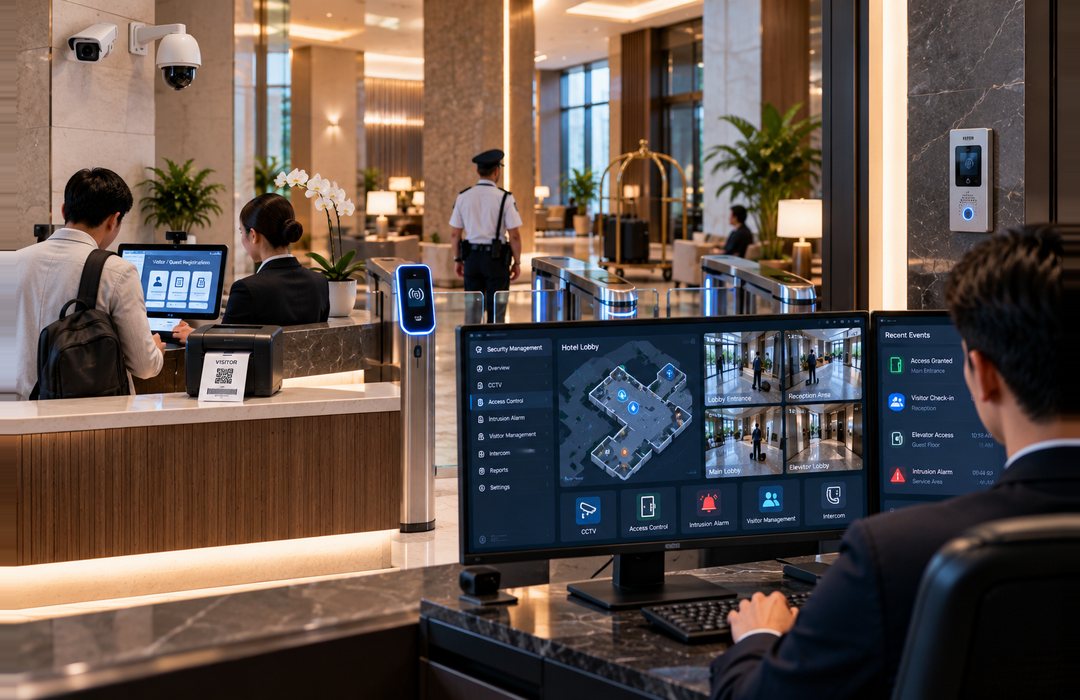
Integrated Security Management Systems Philippines bring several physical security technologies into one management environment so security teams do not have to work across separate platforms for every camera, door, alarm, or visitor event.
A typical setup can connect CCTV Surveillance Systems, Access Control Systems, Intrusion Alarm Systems, Visitor Management Systems, Building Intercom Systems, and other compatible security equipment. The goal is to make information from these systems easier to monitor and act on.
For example, an access control alert can be reviewed together with nearby camera footage instead of requiring personnel to open a separate video platform and search for the right camera manually. Integration does not mean every security device must perform the same function. Each system still does its own job, but the management platform helps security personnel see related events in one place.
Foxcon Total Solutions, Inc. provides Integrated Security Management Systems for offices, manufacturing facilities, hospitals, schools, hotels, financial institutions, government properties, and other commercial environments that need more coordinated security monitoring.
Why Choose Integrated Security Management Systems?
Security teams lose time when important information is spread across several systems. A guard may receive an access control alert in one application, check CCTV through another platform, and review an intrusion alarm somewhere else. During a real incident, moving between those systems can slow down verification.
An Integrated Security Management System can reduce that delay by presenting related security information through a common interface. This makes it easier to understand what is happening. If someone repeatedly attempts to enter a restricted room, the security team can review the access event alongside available camera footage and decide whether the activity needs further action.
Centralized monitoring can also make routine work more manageable. Personnel can review alarms, access events, camera status, and other information without constantly switching between separate applications.
For organizations with several floors, buildings, or branches, this can provide a clearer picture of security activity across the wider property.
How Integrated Security Management Systems Work
The management platform receives information from compatible security systems connected through the facility’s network. CCTV provides video. Access Control records credential and door activity. Intrusion systems report alarms or sensor events. Visitor systems provide information about registered guests, while intercom systems can support communication at entrances.
The platform organizes these events so security personnel can see what is happening and investigate related information. Rules can also be configured for selected events.
For example, a forced-door alarm may bring a nearby camera onto the operator’s screen, create an event record, and notify designated security personnel. Another rule might link a denied access attempt with the camera covering that entrance.
These responses should be based on actual operating procedures. Automation is most useful when it helps personnel perform a clear security task rather than generating more alerts that nobody knows how to handle.
Integrated Security Management Systems Safety & Trust
Integration creates convenience, but it also concentrates access to important security information. User permissions therefore need careful control. A security officer who only needs to view cameras and acknowledge alarms may not need permission to change access rules, delete records, or modify system settings.
Administrator accounts should be limited to authorized personnel, and activity logs should be kept where the platform supports them. Compatibility is another important consideration. Existing cameras, access controllers, alarms, and other devices may not automatically work with every management platform. Compatibility should be checked before the integration design is finalized.
Network security also matters because many integrated systems exchange information over IP networks. Software updates, account protection, network separation, backups, and secure configuration should be part of normal system management.
Routine testing should confirm that integrations still work as expected. A camera may remain online while the event link between the camera and access control has stopped working, so testing should cover the complete workflow rather than individual devices only.
Integrated Security Management Systems Tips
-
Identify which security systems actually need to share information before integrating them.
-
Define user roles so personnel only receive the access required for their work.
-
Keep administrator accounts separate from everyday operator accounts.
-
Test automated responses from beginning to end, not just individual devices.
-
Avoid creating excessive alerts that operators cannot realistically investigate.
-
Document how cameras, doors, alarms, and other systems are linked.
-
Check compatibility before adding older equipment to a new management platform.
-
Back up system configurations before major changes.
-
Review event logs regularly to identify recurring security issues.
-
Reassess workflows when the facility, staffing, or security procedures change.
Give Security Teams Context, Not Just More Alerts
A security system becomes more useful when it helps personnel understand an event instead of simply telling them that something happened. Consider a forced door at a restricted area.
An access control system can report that the door was opened unexpectedly. CCTV can show what happened. An intrusion system may provide another alert from the same location. If those systems operate separately, a security officer has to piece the event together manually.
With proper integration, the related information can be presented together. The officer can review the door event, open the relevant camera, and follow the facility’s response procedure without searching through several systems first.
This does not remove the need for trained personnel. The platform provides context, but people still need to decide whether the situation is accidental, authorized, or a genuine security concern. A professional assessment can help determine which security systems should be connected, what events matter most, how operators should be notified, and which responses should remain manual.
Frequently Asked Questions
What is an Integrated Security Management System?
An Integrated Security Management System is a centralized platform that combines multiple security technologies, such as CCTV, Access Control, Intrusion Alarm Systems, and Visitor Management Systems, into one unified solution.
What are the benefits of integrating multiple security systems?
Integration improves security monitoring, speeds up incident verification, simplifies system management, reduces manual tasks, and gives personnel more context when responding to security events.
Which industries benefit from Integrated Security Management Systems?
Integrated Security Management Systems are commonly used in office buildings, hospitals, schools, hotels, manufacturing facilities, warehouses, financial institutions, government agencies, airports, and commercial complexes.
Can an Integrated Security Management System work with existing security equipment?
In many cases, yes. Compatibility depends on the equipment, communication methods, software platform, and manufacturer support. Existing devices should be checked before integration is planned.
Can Integrated Security Management Systems automate security responses?
Yes. Compatible platforms can be configured to perform actions such as displaying nearby CCTV cameras, sending notifications, creating event records, activating selected alarms, or triggering other approved responses.
Why is preventive maintenance important for Integrated Security Management Systems?
Routine software updates, equipment inspections, integration testing, configuration reviews, and preventive maintenance help ensure connected security systems continue exchanging information and operating as expected.
Centralize Security Monitoring Across Your Facility
Improve security visibility and management with Integrated Security Management Systems that connect compatible surveillance, access control, alarms, and monitoring technologies. Foxcon Total Solutions, Inc. can help plan, integrate, test, and maintain your security infrastructure.
📞 Contact us today to discuss your integrated security requirements.
📍 Serving businesses in Cebu, Metro Manila, and nationwide.
🌐 Explore Foxcon’s solutions to learn more about our services.
References
1. Gabkotech – Integrated Security Management System
https://gabkotech.com/integrated-security-management-system-isms/
2. Cortech – Integrated Security Management Systems
https://cortech.co.uk/integrated-security-management-systems/
3. ScienceDirect – Integrated Security System
https://www.sciencedirect.com/topics/computer-science/integrated-security-system
4. ClearView Communications – Integrated Security Management System
https://clearview-communications.com/news/integrated-security-management-system-isms/
5. Navvia – What Is an Information Security Management System?
https://navvia.com/blog/what-is-an-information-security-management-system