


News and Events
Fire Protection Systems Philippines: Building a Safer Response Before a Fire Spreads
What Are Fire Protection Systems?
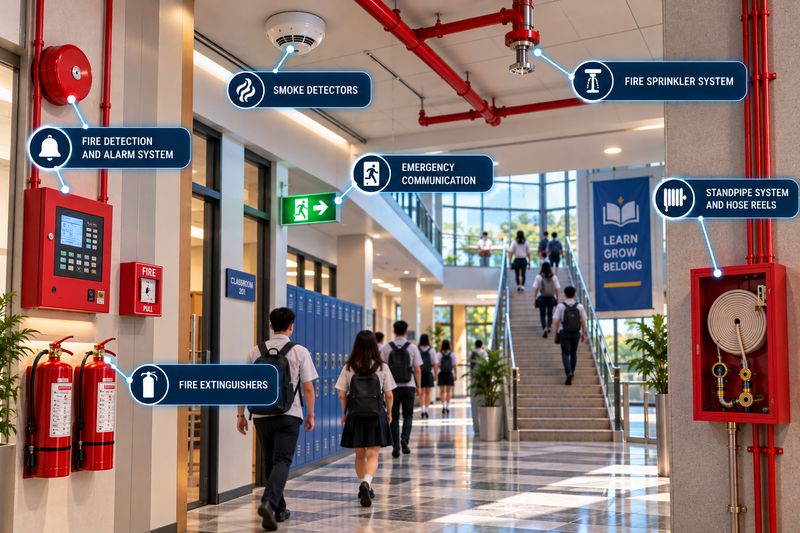
Fire Protection Systems Philippines are designed to detect fire, alert occupants, and help control or suppress a fire before it spreads further through a building.
A complete setup may include fire sprinklers, standpipe systems, hose reels, fire pumps, portable extinguishers, suppression equipment, emergency communication devices, and Fire Detection and Alarm Systems. Each part serves a different purpose, so the right combination depends on the building, its occupancy, and the hazards present inside it.
For example, an office building may depend heavily on detection, alarms, sprinklers, and evacuation systems, while a warehouse or industrial site may need additional suppression measures because of the materials or equipment stored inside.
Foxcon Total Solutions, Inc. provides Fire Protection Systems for offices, hospitals, hotels, schools, warehouses, manufacturing facilities, commercial properties, and government institutions.
Why Choose Fire Protection Systems?
Fire safety is not handled by one device. A smoke detector can provide an early warning, but it does not control the fire. A sprinkler can help contain a developing fire, but occupants still need to know when and how to evacuate.
That is why a Fire Protection System should be planned as a group of connected safety measures rather than a single piece of equipment.
Detection and alarm systems warn people that something is wrong. Suppression systems help control the fire. Emergency communication can provide instructions, while fire pumps and water distribution equipment support systems that depend on an adequate water supply.
This layered approach is especially important in commercial and industrial properties where people, equipment, inventory, and business operations may all be at risk. Proper fire protection also supports safer emergency response by giving building personnel and responders clearer information about what is happening inside the facility.
How Fire Protection Systems Work
The response usually begins when a fire condition is detected. Smoke detectors, heat detectors, flame detectors, or other sensing devices may trigger the Fire Detection and Alarm System. Audible and visual alarms then warn occupants so they can follow the building’s emergency procedures.
If the building has an automatic sprinkler system, individual sprinkler heads in the affected area can respond when the required temperature is reached. These systems are designed to apply water where the fire is developing rather than automatically activating every sprinkler in the building at once.
Other facilities may use specialized suppression systems where water is not suitable for the protected equipment or hazard. Fire pumps, standpipes, hose connections, and other supporting equipment may also form part of the overall response.
When compatible systems are integrated, other building functions may respond as well. This can include selected door functions, elevator operation, emergency communication, or ventilation controls according to the approved fire safety design.
Fire Protection Systems Safety & Trust
Fire protection equipment needs to be selected around the actual hazard. A suppression method suitable for an office may not be appropriate for a server room, kitchen, industrial process, or storage area containing particular materials. Water supply also matters. A sprinkler or standpipe system cannot perform as intended if the required flow or pressure is not available when the system is needed.
Inspection and testing should therefore cover more than visible equipment. Pumps, valves, alarm connections, extinguishers, suppression systems, and other components need regular checks according to their specific requirements.
Changes inside the building should also trigger a review. Adding walls, raising storage heights, changing room use, or installing new equipment can affect whether the existing fire protection design still matches the space. Fire protection work should follow applicable Philippine fire safety requirements, approved plans, and relevant codes and standards.
Foxcon Total Solutions, Inc. can support fire protection projects through assessment, engineering, installation, testing, commissioning, inspection, preventive maintenance, and technical support.
Fire Protection Systems Tips
-
Review fire risks whenever the building use or layout changes.
-
Keep access to extinguishers, hose equipment, fire panels, and emergency exits clear.
-
Do not assume an existing suppression system is suitable after a room changes purpose.
-
Include fire pumps, valves, and water supply components in scheduled inspections.
-
Test alarm and communication functions together where they are designed to work as one response.
-
Keep inspection, testing, and maintenance records organized.
-
Train employees on evacuation procedures and the location of emergency equipment.
-
Investigate damaged or obstructed fire protection equipment immediately.
-
Coordinate fire protection changes with other building systems before implementation.
-
Reassess coverage when new equipment, partitions, storage, or processes are introduced.
Match the Protection to the Actual Fire Risk
Not every area inside a building carries the same fire risk. An office floor filled with workstations has different conditions from a commercial kitchen, warehouse, electrical room, or server space. Using the same protection approach everywhere can leave some areas poorly matched to the hazards present.
This is why fire protection starts with understanding what is inside the space, how people use it, and what could happen if a fire starts there. The type of detection, suppression, water supply, emergency communication, and supporting equipment should follow from that assessment.
It is also important to review the system when operations change. A storage room converted into an equipment area, for example, may need different protection from what was originally installed.
A professional assessment can help determine which systems are appropriate, how they should work together, and whether existing fire protection still matches the facility’s current use.
Frequently Asked Questions
What is a Fire Protection System?
A Fire Protection System is a combination of fire detection, alarm, suppression, and emergency response technologies designed to detect fires early, control their spread, and protect occupants and property.
What components are included in a Fire Protection System?
A Fire Protection System may include fire sprinklers, fire pumps, standpipe systems, fire hose reels, suppression systems, portable fire extinguishers, Fire Detection and Alarm Systems, and emergency communication equipment.
Which facilities require Fire Protection Systems?
Fire Protection Systems are commonly installed in office buildings, hospitals, hotels, manufacturing facilities, warehouses, schools, shopping centers, government buildings, and other commercial or industrial properties.
Can Fire Protection Systems integrate with other building technologies?
Yes. Fire Protection Systems can integrate with Fire Detection and Alarm Systems, Building Management Systems (BMS), Emergency Communication Systems, CCTV Surveillance Systems, and Access Control Systems to improve emergency response and centralized monitoring.
How often should Fire Protection Systems be inspected?
Fire Protection Systems should undergo routine inspections, testing, and preventive maintenance according to applicable fire safety regulations, manufacturer recommendations, and the operational requirements of the facility.
Why is preventive maintenance important for Fire Protection Systems?
Preventive maintenance helps ensure fire protection equipment remains fully operational, identifies potential issues before they become critical, supports regulatory compliance, and improves overall emergency preparedness.
Protect Your Facility With a Complete Fire Safety Strategy
Improve your facility’s fire safety infrastructure with properly planned Fire Protection Systems. From engineering and system installation to integration, testing, commissioning, and maintenance, Foxcon Total Solutions, Inc. can help support your commercial or industrial fire protection requirements.
📞 Contact us today to discuss your fire protection needs.
📍 Serving businesses in Cebu, Metro Manila, and nationwide.
🌐 Explore Foxcon’s solutions to learn more about our services.
References
1. NFPA – Fire Protection Systems
https://www.nfpa.org/education-and-research/fire-protection-systems
2. Filcom Fire Protection – Beginner’s Guide to Fire Protection Systems
https://filcomfire.com/beginners-guide-to-fire-protection-systems-everything-you-need-to-know/
3. University of Southern California Fire Safety – Building Fire Protection Systems
https://fsep.usc.edu/fire-safety/building-fire-protection-systems/
4. Stat-X – Fire Protection Systems vs. Life Safety Systems
https://www.statx.com/fire-education/fire-protection-systems-vs-life-safety-systems/
5. Siegen Philippines – Fire Protection System
https://www.siegenphilippines.com/fire-protection-system