


News and Events
Building Intercom Systems Philippines: Improving Secure Communication for Modern Commercial Facilities
What Are Building Intercom Systems?
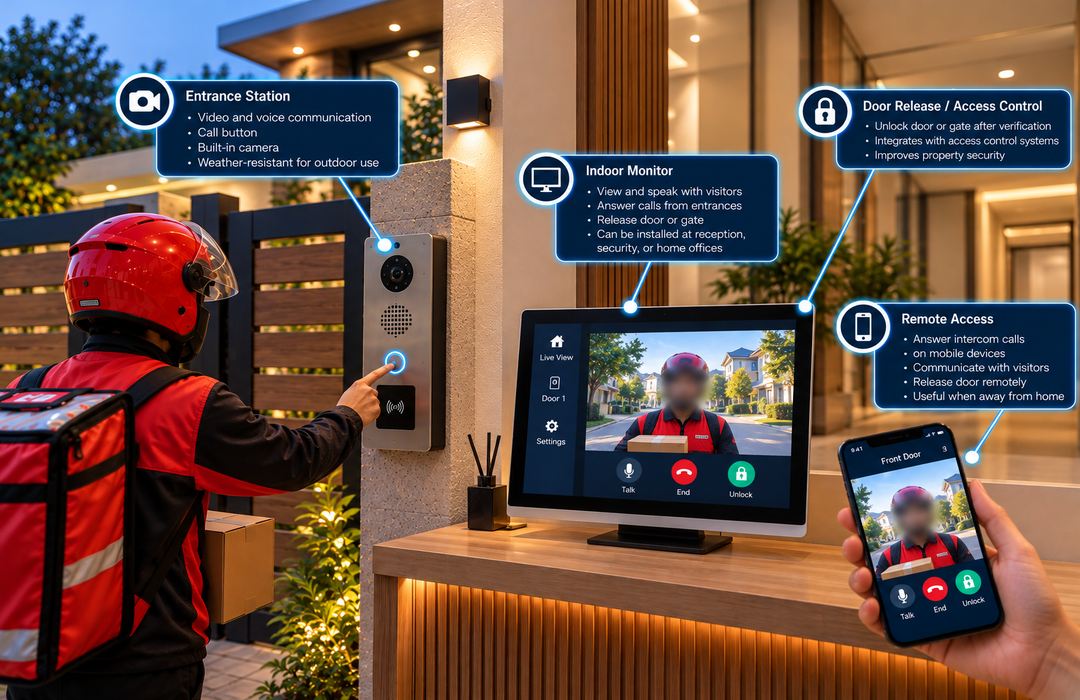
Building Intercom Systems Philippines allow people at entrances, reception areas, offices, security stations, and other parts of a property to communicate without needing to meet face to face. Depending on the setup, the system may support voice, video, or both.
A typical intercom system can include entrance stations, indoor monitors, microphones, speakers, cameras, door release controls, and network connections. Some systems also allow authorized users to answer intercom calls through mobile devices or manage several entry points from one location.
For commercial facilities, the value of an intercom is straightforward: it gives staff a chance to speak with or see a visitor before deciding whether that person should be allowed inside. It can also provide a direct communication line between reception, security, loading areas, gates, and other parts of the property.
Foxcon Total Solutions, Inc. provides Building Intercom Systems for offices, hospitals, schools, hotels, warehouses, residential developments, and other properties that need clearer communication and better control at entrances.
Why Choose Building Intercom Systems?
Opening a door without knowing who is on the other side creates an unnecessary security gap. A Building Intercom System gives reception or security personnel a way to communicate with visitors before allowing entry.
Audio intercoms provide two-way voice communication, while video intercoms add visual confirmation. This can be useful at entrances where staff need more information before opening a door or gate.
Intercoms can also help staff communicate across larger facilities. A warehouse may use stations between loading areas and security offices, while a hospital or school may need communication between entrances, reception areas, and internal departments.
When the intercom is connected to compatible Access Control Systems, an authorized employee can verify the visitor and release the door from the same workflow. Some modern systems also support remote answering through mobile devices, which can be useful when the person responsible for the entrance is away from the desk.
How Building Intercom Systems Work
The process usually starts when a visitor presses a button at an entrance station. The call is sent to an indoor monitor, reception desk, security station, or another authorized device.
With an audio system, both sides can speak through the built-in microphone and speaker. With a video system, the recipient can also view the visitor through a camera installed at the entrance.
If the visitor is approved, the user may release the connected door or gate through the intercom or an integrated access control system. If the visitor cannot be verified, the entrance remains secured.
Network-based systems may connect several intercom stations across the same property. This allows security or reception personnel to manage communication from multiple entrances without placing a separate desk at each location.
Some systems can also route calls to smartphones or other supported devices, allowing authorized users to respond when they are not physically beside the indoor station.
Building Intercom Systems Safety & Trust
Clear audio and dependable door control matter more than adding unnecessary features. If visitors cannot hear the person inside, or the camera angle does not clearly show the entrance, the system becomes harder to use and less useful for security.
Entrance stations should be positioned where visitors can easily find and operate them. Outdoor equipment should also be suitable for the conditions where it will be installed, including exposure to weather, dust, or heavy daily use.
Door release functions should only be available to authorized personnel. If the intercom is connected to the building network or a mobile application, account permissions and software updates should also be managed carefully.
For video intercoms, camera placement should provide a useful view of the visitor rather than simply showing the surrounding area. Lighting should also be considered because poor lighting can make visual verification difficult.
Regular testing should cover microphones, speakers, cameras, call buttons, door release controls, network connections, and power supplies. Finding a failed component during maintenance is far better than discovering it when someone is waiting at a secured entrance.
Building Intercom Systems Tips
-
Decide which entrances actually need visitor communication before adding intercom stations.
-
Choose video intercoms where visual confirmation provides real security value.
-
Position entrance stations at a practical height and location for visitors.
-
Test audio quality in the actual environment, especially near busy roads, machinery, or other noisy areas.
-
Limit remote door release to employees who are authorized to approve entry.
-
Connect intercom and access control functions where a single verification process makes sense.
-
Check cameras in both daylight and low-light conditions.
-
Test microphones, speakers, buttons, door release controls, and network connections regularly.
-
Review system capacity before adding new entrances or buildings.
Decide Who Gets In Before the Door Opens
The most useful moment for an intercom happens before access is granted. A delivery driver arriving at a warehouse, a contractor visiting an office, or a guest entering a residential development should not automatically be allowed inside simply because they reached the door.
The intercom creates a short verification step between arrival and entry.
Video can make that decision easier when visual confirmation is needed. Access control can then handle the actual door release, while CCTV may provide a wider view of activity around the entrance.
The exact setup should depend on how the building handles visitors. A small office may only need one entrance station connected to reception. A larger property may require several stations, centralized security monitoring, and remote call handling.
A professional assessment can help determine where intercom stations should be installed, which entrances need video, how door release should work, and whether integration with Access Control or CCTV would be useful.
Frequently Asked Questions
What is a Building Intercom System?
A Building Intercom System is a communication solution that enables voice or video communication between visitors and building occupants. It helps verify visitors, manage access, and improve communication within commercial and residential facilities.
What is the difference between an audio intercom and a video intercom?
An audio intercom provides two-way voice communication, while a video intercom adds a camera and display that allows users to see visitors before granting access.
Can Building Intercom Systems integrate with Access Control Systems?
Yes. Many modern Building Intercom Systems integrate with Access Control Systems, allowing authorized users to remotely unlock doors or gates after verifying a visitor’s identity.
Where are Building Intercom Systems commonly used?
Building Intercom Systems are commonly installed in office buildings, residential developments, schools, hospitals, hotels, warehouses, commercial establishments, and industrial facilities that require secure visitor communication and controlled entry.
Can Building Intercom Systems be managed remotely?
Yes. Many modern intercom systems support mobile applications that allow authorized users to answer calls, communicate with visitors, and manage door access remotely using a smartphone or tablet.
Why is preventive maintenance important for Building Intercom Systems?
Routine inspections, equipment testing, software updates, and preventive maintenance help ensure microphones, speakers, cameras, door release mechanisms, and communication devices continue operating reliably while extending the lifespan of the system.
Deliver Secure Communication Across Your Facility
Create clearer communication between entrances, offices, security areas, and other facility locations with professionally planned Building Intercom Systems. Whether you need new intercom equipment, integration with access control, testing, or system upgrades, Foxcon Total Solutions, Inc. can help.
📞 Contact us today to discuss your intercom system requirements.
📍 Serving businesses in Cebu, Metro Manila, and nationwide.
🌐 Explore Foxcon’s solutions to learn more about our services.