


News and Events
Perimeter Security Systems Philippines: Protecting Commercial Properties From the Outside In
What Are Perimeter Security Systems?
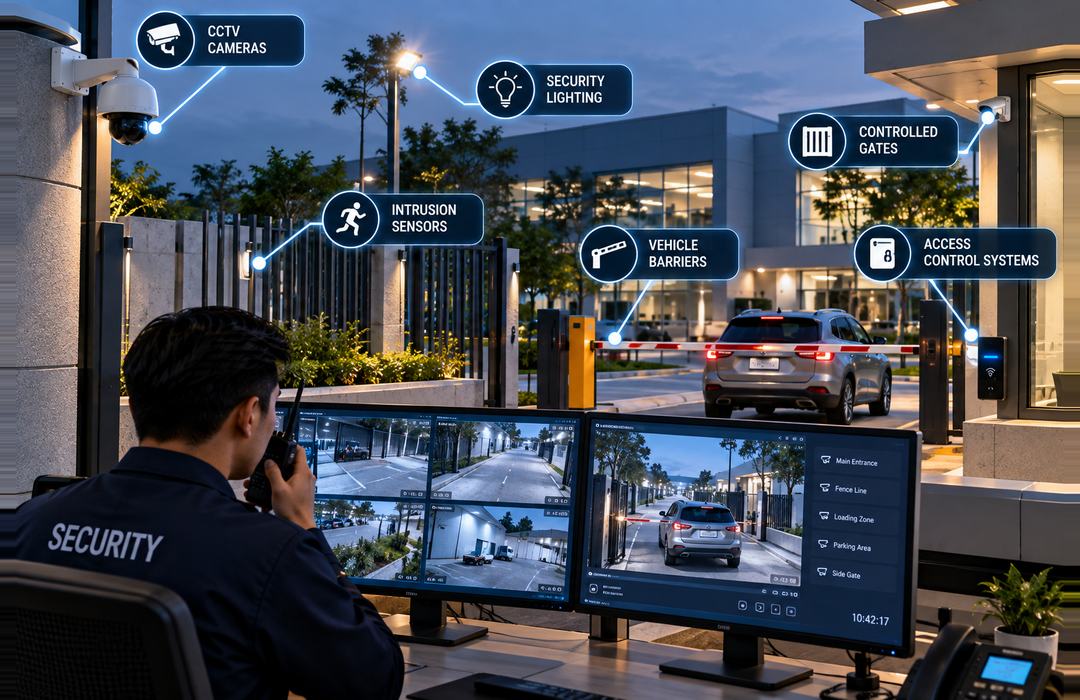
Perimeter Security Systems Philippines protects the outer areas of a commercial or industrial property before a possible intruder reaches the main building. They focus on boundaries such as fences, gates, parking areas, loading zones, service roads, pedestrian entrances, and other points where people or vehicles can enter the site.
A perimeter setup can include CCTV cameras, motion or intrusion sensors, controlled gates, vehicle barriers, security lighting, Access Control Systems, and monitoring equipment. The right combination depends on the size of the property, how people normally enter and leave, and which areas need closer protection.
The goal is not to turn every boundary into a heavily restricted zone. It is to give security personnel enough visibility and warning to identify unusual activity early and decide whether action is required.
Foxcon Total Solutions, Inc. provides Perimeter Security Systems for warehouses, manufacturing facilities, logistics centers, office properties, schools, hospitals, government facilities, and other sites where outdoor areas form an important part of the security plan.
Why Choose Perimeter Security Systems?
Security becomes more difficult when the first sign of a problem appears only after someone has reached the building.
A Perimeter Security System moves that point of detection farther outward. If suspicious activity is identified near a fence, gate, loading area, or restricted section of the property, security personnel have more time to review the situation before it moves closer to employees, equipment, or buildings.
This is especially useful on properties with large outdoor areas. Warehouses may have loading bays and yards containing equipment or vehicles. Manufacturing sites may have several entrances, storage areas, and restricted zones spread across the property. A security plan focused only on doors inside the building can leave these spaces with limited coverage.
Perimeter protection can also help manage authorized activity. Controlled gates and vehicle entrances make it easier to separate normal employee, visitor, contractor, and delivery traffic from movement that needs further verification.
The best result comes from using different systems for different jobs rather than expecting one camera or sensor to protect the entire property.
How Perimeter Security Systems Work
Planning starts with the property’s actual boundary. Security teams identify vehicle entrances, pedestrian gates, fences, parking areas, loading zones, blind spots, and locations where unauthorized access would be easier.
Different technologies are then placed according to those risks.
CCTV cameras provide visual coverage and recorded evidence. Intrusion sensors can detect movement or activity around selected areas. Access Control Systems can manage approved entry through gates and other controlled points, while barriers can help regulate vehicle movement.
When suspicious activity is detected, the system can send an alert to authorized personnel or a central monitoring station. Depending on the setup, nearby cameras may also be used to verify what triggered the alert.
This verification step matters. A sensor may detect movement, but security personnel still need enough information to decide whether it came from an intruder, an authorized employee, a vehicle, wildlife, weather, or another harmless cause.
Perimeter Security Systems Safety & Trust
Outdoor security equipment has to deal with conditions that indoor devices may never face. Rain, heat, dust, changing light, vegetation, vehicle movement, and other environmental factors can affect cameras and sensors if the equipment is not selected and positioned properly.
Camera placement should provide useful views of entrances and boundary areas without leaving obvious blind spots. Lighting should also be reviewed because a camera that performs well during the day may provide very different results after dark.
Sensors require similar attention. Poor placement can lead to frequent false alarms, which can make personnel less likely to take future alerts seriously.
Physical security should also be considered. Cameras, cabinets, readers, and other devices placed outdoors should be mounted where they are less vulnerable to accidental damage or tampering.
Network-connected equipment should be protected through controlled user access, secure configuration, regular software updates, and appropriate network security practices.
Routine testing should cover cameras, sensors, barriers, gate controls, communication links, recording equipment, and backup power. A perimeter system should be checked under real operating conditions rather than assuming that every device still works because it appears online.
Perimeter Security Systems Tips
-
Walk the property before deciding where equipment should be installed.
-
Pay close attention to secondary gates, loading areas, service roads, and less visible sections of fencing.
-
Check camera views during both daytime and nighttime conditions.
-
Keep vegetation, parked vehicles, and stored materials from blocking important surveillance areas.
-
Use different technologies for different risks instead of relying on cameras alone.
-
Configure sensors carefully to reduce unnecessary alarms.
-
Limit gate and barrier controls to authorized personnel.
-
Review access procedures for employees, visitors, contractors, and delivery vehicles separately.
-
Test perimeter equipment after storms, construction work, landscaping changes, or other site modifications.
-
Reassess coverage when new buildings, parking areas, fences, or entrances are added.
Spot Security Problems Before They Reach the Building
A perimeter system works best when it gives security personnel useful time to make a decision.
Consider a warehouse with a large yard behind the main building. If surveillance begins only at the warehouse doors, someone could already be deep inside the property before the security team becomes aware of the situation.
Monitoring the outer fence, vehicle entrance, and loading areas changes that. Security staff can see activity earlier, compare an alert with camera footage, and determine whether the person or vehicle belongs there.
The same principle applies to offices, campuses, hospitals, factories, and government facilities. The exact equipment may differ, but the question remains the same: where should the security team first become aware of unusual activity?
A professional site assessment can help identify those points and determine where cameras, sensors, controlled gates, barriers, lighting, or other measures will provide the most useful coverage.
Frequently Asked Questions
What is a Perimeter Security System?
A Perimeter Security System is a combination of security technologies designed to protect the outer boundary of a property. It helps detect, deter, and prevent unauthorized access before individuals reach the building or restricted areas.
What technologies are commonly used in Perimeter Security Systems?
Perimeter Security Systems may include CCTV cameras, intrusion detection sensors, Access Control Systems, gate barriers, perimeter fencing, security lighting, vehicle access controls, and centralized monitoring platforms.
Which facilities benefit from Perimeter Security Systems?
Perimeter Security Systems are commonly used in office buildings, manufacturing plants, warehouses, logistics centers, educational institutions, hospitals, government facilities, commercial complexes, and industrial sites with defined property boundaries.
Can Perimeter Security Systems integrate with other security technologies?
Yes. Modern Perimeter Security Systems can integrate with CCTV, Access Control Systems, Intrusion Alarm Systems, Building Management Systems (BMS), and centralized security monitoring platforms to improve situational awareness and response.
Why is perimeter protection important?
Perimeter protection helps identify potential security threats before they reach the building. Early detection allows security personnel to verify incidents, respond more quickly, and reduce the risk of unauthorized access or property damage.
Why is preventive maintenance important for Perimeter Security Systems?
Routine inspections, equipment testing, software updates, and preventive maintenance help ensure cameras, sensors, access devices, and communication systems continue operating reliably while supporting long-term security performance.
Make Your Perimeter Security More Visible and Effective
Improve visibility and protection around entrances, boundaries, parking areas, and other external zones with professionally planned Perimeter Security Systems. From surveillance and intrusion detection to access control and integrated monitoring, Foxcon Total Solutions, Inc. can help develop a solution based on your property’s security requirements.
📞 Contact us today to discuss your perimeter security requirements.
📍 Serving businesses in Cebu, Metro Manila, and nationwide.
🌐 Explore Foxcon’s solutions to learn more about our services.
References
1. Avigilon – Perimeter Security Systems
https://www.avigilon.com/blog/perimeter-security-systems
2. Hikvision – Perimeter Protection
https://www.hikvision.com/ph/solutions/solutions-by-function/perimeter-protection/
3. Hanwha Vision – What Is Perimeter Security?
https://www.hanwhavision.com/us/news-events/article/what-is-perimeter-security
4. BeeSense – Top Perimeter Security Systems by Category
https://beesense-sys.com/top-13-perimeter-security-systems-by-category/
5. SensoGuard – Choosing the Right Perimeter Security System
https://sensoguard.com/blog-choosing-the-right-perimeter-security-system-a-comprehensive-comparison