


News and Events
Electrical Panel Load Balancing Philippines: Improving Power Distribution Across Circuits
What Is Electrical Panel Load Balancing?
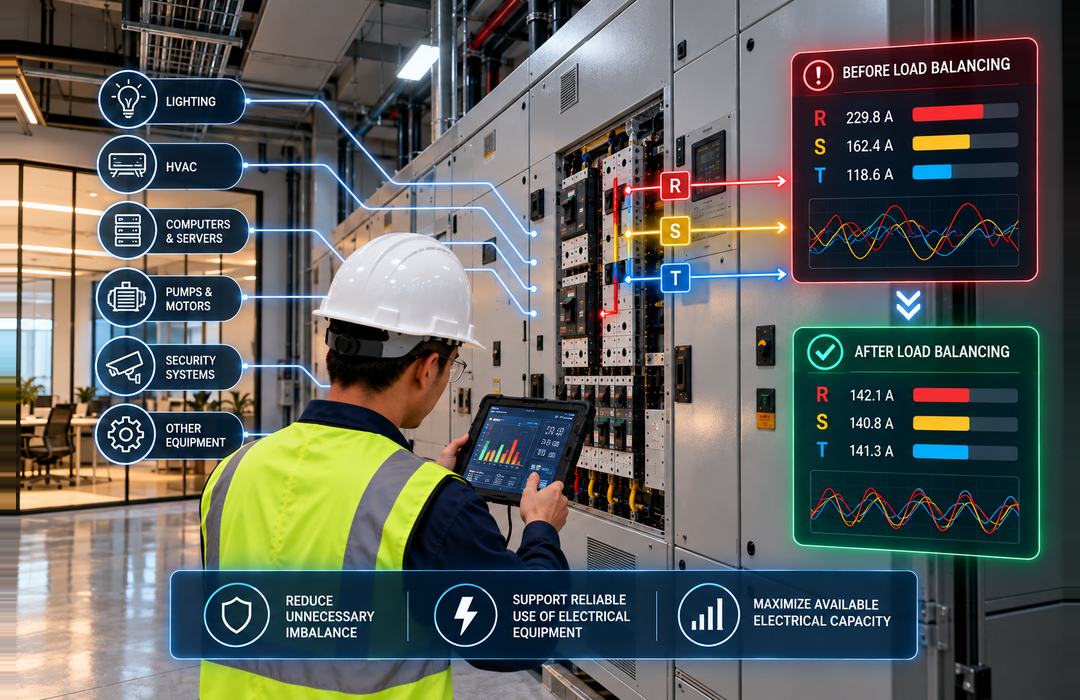
Electrical Panel Load Balancing Philippines is the process of measuring and distributing electrical loads more appropriately across the phases and circuits of a power distribution system. The goal is to reduce unnecessary imbalance while supporting reliable use of panels, feeders, conductors, protective devices, and connected electrical equipment.
Commercial and industrial facilities may contain lighting, HVAC equipment, computers, servers, pumps, motors, security systems, machinery, and other loads that operate at different times and power levels. As equipment is added, removed, relocated, or placed on different schedules, the original distribution of electrical demand can change.
In three-phase systems, one phase may gradually carry more current than the others if single-phase loads are not distributed appropriately.
Foxcon Total Solutions, Inc. provides electrical engineering, power distribution, testing, commissioning, monitoring, and maintenance services that can support properly planned electrical systems.
Why Choose Electrical Panel Load Balancing?
Electrical systems do not remain static throughout the life of a building. New equipment may be installed, office layouts may change, production processes may expand, and circuits may be reassigned without a complete review of how those changes affect phase loading.
Electrical Panel Load Balancing Philippines helps technical teams identify whether electrical demand is being distributed unevenly. Measuring actual current on each phase can reveal conditions that may not be obvious from panel schedules or the number of breakers alone.
Significant phase imbalance can lead to unequal conductor loading and less effective use of available electrical capacity. Depending on the system, it may also contribute to increased neutral current, voltage imbalance, equipment stress, or other electrical performance concerns that require further investigation.
Load balancing can complement Electrical Panel Solutions, Main Distribution Board Solutions, Power Distribution Systems, Electrical Load Management Systems, Power Monitoring Systems, Power Quality Monitoring Systems, and Electrical Testing and Commissioning.
How Electrical Panel Load Balancing Works
The process begins by reviewing the electrical distribution system and measuring current under representative operating conditions. Qualified personnel may examine panel schedules, feeder arrangements, connected equipment, breaker ratings, conductor sizes, and other relevant electrical information before making changes.
Current measurements are then compared across the phases of the applicable panel or feeder. The objective is not necessarily to make every phase exactly identical, but to determine whether the difference is significant enough to justify redistribution or further investigation.
Where appropriate, selected single-phase circuits may be reassigned between phases to create a more suitable distribution. Any change must consider the connected load, circuit function, conductor capacity, protective-device rating, neutral arrangement, equipment requirements, and overall electrical design.
After modifications, measurements should be repeated under comparable operating conditions. This confirms whether the redistribution actually improved phase loading rather than simply moving the imbalance elsewhere.
Electrical Panel Load Balancing Safety & Trust
Electrical panels may contain exposed energized components capable of causing electric shock, burns, or arc-flash hazards. Load measurements, inspection, and circuit modifications should therefore be performed only by qualified electrical personnel using appropriate procedures, instruments, protective equipment, and isolation practices where required.
Load balancing should not be based only on counting how many breakers are connected to each phase. One circuit may supply a lightly loaded office area while another serves a motor, heater, server rack, or other equipment with significantly higher demand.
Measurements should also be interpreted in context. A temporary difference between phases may be normal if equipment cycles on and off, while a persistent imbalance under typical operating conditions may indicate that circuit assignments or connected loads should be reviewed.
Foxcon Total Solutions, Inc. supports electrical projects through Engineering and Design, Supply and Installation, Electrical Testing and Commissioning, Power Monitoring, Preventive Maintenance, and related technical services.
Electrical Panel Load Balancing Tips
-
Measure actual current. Do not assume that equal numbers of circuits produce equal electrical loads.
-
Use representative operating conditions. Measurements should reflect typical facility activity.
-
Compare all phases. Review the overall distribution rather than evaluating one circuit in isolation.
-
Check the neutral where applicable. Certain load types can affect neutral current differently.
-
Review recent electrical changes. New equipment or relocated circuits may explain developing imbalance.
-
Confirm conductor and breaker ratings. Never move a circuit without checking the complete electrical design.
-
Update panel schedules. Documentation should reflect every approved circuit change.
-
Repeat measurements afterward. Verify that the adjustment produced the intended result.
-
Include panels in preventive maintenance. Load distribution can change again as the facility evolves.
Measure the Current Before Moving the Circuit
A panel can appear unbalanced simply because more breakers are installed on one phase, but breaker count does not indicate actual electrical demand. Several lightly loaded circuits may draw less current than one heavily loaded motor or equipment circuit.
Before relocating any circuit, qualified personnel should measure phase current under normal operating conditions and identify which loads are contributing to the difference. Measurements may need to be taken at more than one time if equipment operates according to schedules or cycles.
The circuit function should also be reviewed before making changes. Moving a load without understanding its operating characteristics can affect phase distribution elsewhere or create new issues within the panel.
Using measured demand as the basis for balancing provides a more reliable result than trying to equalize the panel by appearance alone.
Frequently Asked Questions
What is electrical load balancing?
Electrical load balancing is the process of evaluating and distributing electrical demand more appropriately across phases or circuits within a power distribution system.
Why can electrical loads become unbalanced?
Equipment additions, circuit changes, different operating schedules, facility expansions, and changes in how existing equipment is used can alter phase loading over time.
Does each phase need to carry exactly the same current?
Not necessarily. Perfectly identical loading is often impractical because connected equipment operates differently. The objective is to avoid significant or unnecessary imbalance based on actual system conditions.
Is load balancing the same as electrical load management?
No. Load management is a broader approach involving monitoring, prioritizing, or controlling electrical demand. Load balancing focuses specifically on how demand is distributed across phases or circuits.
Can uneven phase loading affect equipment?
Significant electrical imbalance can contribute to unwanted operating conditions, particularly in three-phase systems. The actual effect depends on the equipment, system design, severity, and cause of the imbalance.
Can any circuit simply be moved to another phase?
No. The circuit requirements, connected equipment, conductor capacity, protective devices, panel arrangement, and overall electrical design should be evaluated first.
When should electrical load distribution be reviewed?
It may be reviewed after major equipment additions, facility modifications, panel changes, electrical complaints, preventive maintenance, or when monitoring shows persistent phase differences.
Can power monitoring help with load balancing?
Yes. Suitable metering or monitoring equipment can provide current and demand information that helps technical personnel understand how electrical loading changes over time.
Check Whether the Imbalance Is Persistent Before Reconfiguring the Panel
Electrical demand can change throughout the day as air-conditioning equipment cycles, motors start and stop, office loads increase, or production equipment operates according to schedule. A single measurement may therefore capture a temporary condition rather than a persistent imbalance.
Where operating conditions vary significantly, technical personnel may need measurements at different times or continuous monitoring to understand the actual load pattern. Historical power data can help show whether one phase consistently carries more current or whether the difference changes with normal operations.
If the imbalance is temporary, moving circuits may not provide a meaningful improvement. If it remains significant across representative operating conditions, circuit redistribution or a broader electrical investigation may be appropriate.
Distinguishing temporary variation from persistent imbalance helps prevent unnecessary changes to an otherwise properly operating distribution system.
Balance Electrical Loads Around Measured Demand, Not Breaker Count
A properly planned Electrical Panel Load Balancing Philippines assessment should consider phase current, actual connected demand, operating schedules, conductor capacity, protective devices, neutral loading, panel documentation, recent electrical changes, and future equipment requirements.
Foxcon Total Solutions, Inc. can support electrical load assessment, panel evaluation, power monitoring, engineering review, testing, commissioning, documentation, and preventive maintenance for commercial and industrial facilities.
📞 Contact us today to discuss your electrical panel and power distribution requirements.
📍 Serving businesses in Cebu, Metro Manila, and nationwide.
🌐 Explore Foxcon’s solutions to learn more about our services.
References
-
Right Touch Electrical – Electrical Load Balancing
https://www.righttouchelectrical.com/electrical-services/circuit-repair/electrical-load-balancing/ -
EcoFlow – Load Balancing
https://www.ecoflow.com/ca/blog/load-balancing -
ExpertCE – Load Balancing and Average Load Calculations
https://expertce.com/learn-articles/calculate-averages-load-balancing/ -
Inside Out Electric – Electrical Load Balancing Explained
https://insideoutelectricllc.com/electrical-load-balancing-explained/ -
Northcrest – Understanding Load Balancing
https://northcrestllc.com/blog/understanding-load-balancing/