


News and Events
Emergency Power Distribution Systems Philippines: Maintaining Power for Critical Building Operations
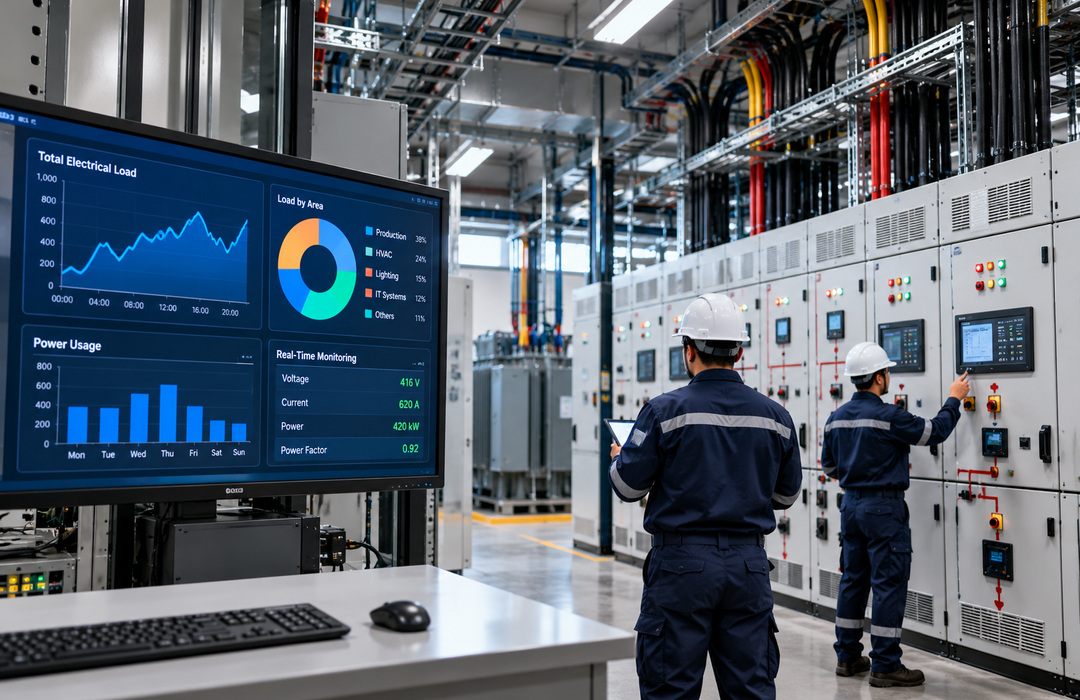
What Are Emergency Power Distribution Systems?
Emergency Power Distribution Systems Philippines are electrical infrastructure solutions designed to distribute backup or emergency power to selected critical loads when the normal electrical supply becomes unavailable. Rather than attempting to keep every circuit energized, these systems direct available backup power toward equipment and building functions identified as essential to facility operations.
Emergency power distribution may involve dedicated panels, feeders, branch circuits, protective devices, Automatic Transfer Switches, standby generators, UPS systems, monitoring equipment, and related electrical infrastructure.
The exact arrangement depends on the type of facility, required continuity, connected loads, and the backup power sources available. These systems are commonly used in commercial buildings, hospitals, data centers, industrial facilities, offices, telecommunications environments, and other locations where selected operations need additional power continuity.
Foxcon Total Solutions, Inc. provides electrical works and power infrastructure solutions that can support dependable commercial and industrial facilities.
Why Choose Emergency Power Distribution Systems?
A power interruption can affect lighting, communications, servers, security equipment, network infrastructure, building controls, pumps, and other important systems. However, these loads do not necessarily require the same amount of backup capacity or the same response time during an outage.
Emergency Power Distribution Systems Philippines provide a structured method for identifying, separating, and supplying designated critical loads through appropriate backup infrastructure. This allows electrical designers and facility teams to assign power according to operational priorities instead of treating every circuit equally.
Separating critical and non-critical loads can also make generator and UPS capacity easier to plan. Backup resources can be reserved for equipment that genuinely needs continuity, while lower-priority loads remain disconnected or are restored later when adequate capacity becomes available.
Emergency power distribution can work alongside Backup Power Systems, UPS Solutions, Automatic Transfer Switch Systems, Generator Synchronization Systems, Main Distribution Boards, Electrical Load Management Systems, and Power Monitoring Systems.
How Emergency Power Distribution Systems Work
During normal operation, designated equipment receives power from the facility’s normal electrical source. Transfer equipment monitors the condition of that source or responds to control signals according to the electrical design.
When a qualifying loss or unacceptable condition occurs, an Automatic Transfer Switch or other transfer arrangement can disconnect selected loads from the normal source and connect them to an available alternate source, such as a standby generator. The generator must first start and reach acceptable voltage and frequency before applicable loads are transferred.
UPS systems may support equipment that cannot tolerate even the short interruption associated with generator startup and transfer. Servers, network devices, control equipment, or other sensitive loads may therefore receive temporary or continuous conditioned power through a UPS while longer-duration backup becomes available.
Emergency distribution panels and dedicated circuits then deliver power to the loads identified in the design. When normal power returns and remains within the required operating conditions, transfer equipment can return designated loads to the normal supply according to the programmed sequence.
Emergency Power Distribution Systems Safety & Trust
Emergency power infrastructure involves multiple electrical sources and should be engineered carefully. Normal and alternate supplies, transfer equipment, protective devices, panelboards, feeders, grounding arrangements, and connected loads need to operate as a coordinated system rather than as independent components.
Electrical protection is especially important because available fault current and operating conditions can change depending on which source is supplying the system. Generator characteristics, protective-device coordination, transfer-switch ratings, conductor capacity, grounding, and equipment short-circuit ratings should therefore be considered during design.
Circuits and panels should also be clearly identified so maintenance personnel understand which equipment may remain energized from an alternate source when normal utility power is unavailable. Appropriate isolation and safe maintenance procedures are necessary wherever more than one source can energize the electrical installation.
Foxcon Total Solutions, Inc. supports electrical projects through Engineering and Design, Supply and Installation, Project Implementation, Electrical Testing and Commissioning, Preventive Maintenance, and related technical services.
Emergency Power Distribution Systems Tips
-
Classify loads by priority. Separate life-safety, critical operational, important, and non-essential loads where appropriate.
-
Calculate the actual backup demand. Generator and UPS capacity should reflect the loads expected to operate during an interruption.
-
Account for starting currents. Motors, pumps, compressors, and other equipment may require more power during startup.
-
Coordinate generators, UPS systems, and transfer equipment. Each component should support the intended operating sequence.
-
Label emergency panels and circuits clearly. Maintenance personnel should know which circuits can receive alternate power.
-
Avoid hidden common failure points. Critical loads should not depend unnecessarily on one shared upstream component.
-
Test the complete sequence periodically. Confirm transfer operation and the behavior of actual connected loads.
-
Review capacity after facility changes. Added equipment may increase emergency demand beyond the original design.
-
Maintain backup equipment regularly. Generators, batteries, transfer switches, and associated electrical components require periodic inspection.
Prioritize the Loads Before Sizing the Backup System
One of the most important emergency power decisions is determining what actually needs to remain energized during an outage. Simply adding together every connected electrical load can lead to an unnecessarily large backup system, while underestimating critical demand can leave essential equipment unsupported.
Facility teams should classify loads according to operational importance. Some equipment may require uninterrupted power, some can tolerate a short transfer delay, and other loads may be temporarily disconnected without significantly affecting essential operations.
The sequence also matters. Starting several large loads at the same time can create a temporary demand that is significantly higher than their normal running load. Staged loading or load-management controls may therefore be used where appropriate to prevent unnecessary stress on generators and distribution equipment.
Backup capacity should ultimately be based on the intended emergency operating scenario, not just the building’s normal electrical demand. Understanding what must run, how quickly it must return, and how much power it requires helps create a more practical emergency distribution design.
Frequently Asked Questions
What is an Emergency Power Distribution System?
An Emergency Power Distribution System delivers power from an appropriate alternate source to selected electrical loads when the normal supply becomes unavailable.
What equipment can receive emergency power?
Depending on the facility and design, selected loads may include communication equipment, IT infrastructure, security systems, building controls, lighting, pumps, medical equipment, and other systems identified as critical.
Is emergency power distribution the same as a backup generator?
No. A generator is one possible backup power source. Emergency power distribution includes the transfer equipment, panels, circuits, protective devices, and other infrastructure required to deliver that power to designated loads.
Can UPS systems be part of emergency power infrastructure?
Yes. UPS systems can support equipment that requires temporary or uninterrupted power while another backup source, such as a generator, starts and becomes available.
Does every building circuit need emergency power?
Not necessarily. Emergency power is typically assigned according to the facility’s operational, safety, continuity, and project requirements.
What is the role of an Automatic Transfer Switch?
An Automatic Transfer Switch transfers designated loads between normal and alternate power sources when the required operating conditions are met.
Why should emergency power systems be tested?
Testing helps verify that generators, UPS systems, transfer equipment, panels, circuits, alarms, and designated loads respond according to the intended sequence during a loss of normal power.
When should emergency power capacity be reviewed?
Capacity should be reviewed when major equipment is added, facility operations change, new critical loads are introduced, or the backup power infrastructure is modified.
Test the Complete Emergency Power Path, Not Just the Generator
A generator starting successfully does not prove that critical equipment will remain available during an actual outage. The generator, transfer equipment, emergency panels, branch circuits, UPS systems, controls, and connected loads all have to operate correctly as one complete electrical path.
Testing should confirm the response to a simulated loss of normal power, generator startup, voltage and frequency stabilization, transfer operation, energization of designated circuits, UPS behavior, staged loading where applicable, and the performance of actual critical equipment.
The return to normal power should also be verified. Retransfer delays, generator cooldown, alarms, protection, and control sequences can affect how smoothly the system returns to its normal operating state.
Testing the full path provides a more realistic assessment of emergency readiness than checking individual components in isolation. Problems are easier to identify and correct before an actual outage places the facility under operational pressure.
Verify the Entire Backup Power Chain Before an Outage Does
A properly planned Emergency Power Distribution Systems Philippines installation should identify critical loads, provide appropriate backup capacity, coordinate multiple power sources, and distribute alternate power through clearly defined electrical paths.
Foxcon Total Solutions, Inc. can support emergency power planning, electrical distribution, generator and UPS integration, transfer equipment, installation, testing, commissioning, and preventive maintenance for commercial and industrial facilities.
📞 Contact us today to discuss your emergency power distribution requirements.
📍 Serving businesses in Cebu, Metro Manila, and nationwide.
🌐 Explore Foxcon’s solutions to learn more about our services.
References
-
NFPA – Maintaining Emergency Power Supply Systems https://www.nfpa.org/news-blogs-and-articles/blogs/2020/09/18/maintaining-your-emergency-power-supply-system-is-critical-particularly-during-hurricane-season
-
EcoFlow Philippines – What Is an Emergency Power Supply? https://www.ecoflow.com/ph/blog/what-is-emergency-power-supply
-
ScienceDirect – Emergency Power Supply System https://www.sciencedirect.com/topics/engineering/emergency-power-supply-system
-
Schneider Electric – Emergency and Standby Power Systems https://productinfo.se.com/0100db2301_elecdistfunddesignguide/0100db2301-electrical-distribution-fundamentals-design-guide/English/0100DB2301%20Electrical%20Distribution%20Fundamentals%20Design%20Guide%20(bookmap)_DD00648155.xml/$/EmergencyAndStandbyPowerSystems-A64217F8
-
Garber Electrical Contractors – Commercial Emergency Power Solutions https://www.garberelectric.com/the-unsung-hero-understanding-commercial-emergency-power-solutions/