


News and Events
Fire Alarm Control Panels Philippines: Intelligent Fire Detection for Safer Commercial Facilities
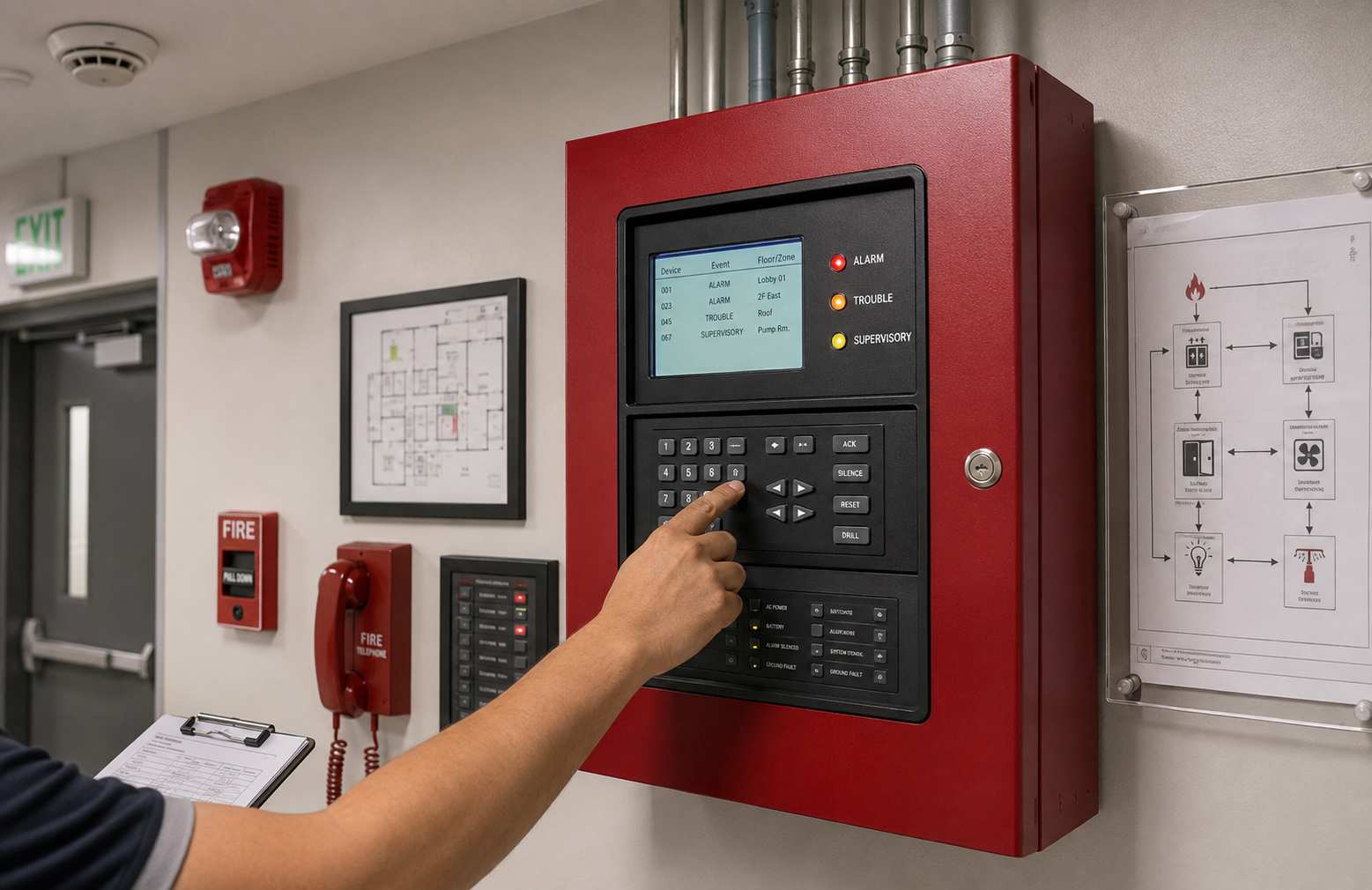
What Are Fire Alarm Control Panels?
Fire Alarm Control Panels Philippines serve as the central control point of a Fire Detection and Alarm System (FDAS). Often considered the brain of the system, a Fire Alarm Control Panel (FACP) continuously receives and processes signals from smoke detectors, heat detectors, flame detectors, gas detectors, manual call points, and other initiating devices.
The panel monitors connected equipment and can identify conditions such as Alarm, Trouble, and Supervisory. An Alarm indicates a detected fire condition, while Trouble can indicate a system fault requiring attention. A Supervisory condition may indicate an abnormal status involving connected fire protection equipment.
Fire Alarm Control Panels may be conventional or addressable. Conventional panels organize detection devices into zones, while addressable systems assign individual digital addresses to connected devices, allowing operators to identify the specific detector or call point associated with an event.
Why Choose Fire Alarm Control Panels?
A reliable Fire Alarm Control Panels Philippines solution provides centralized monitoring and coordination for the devices responsible for detecting and communicating potential fire emergencies.
Modern panels can process information from connected devices and provide facility personnel with information about alarm locations, equipment faults, and system conditions. Addressable systems can provide more specific device identification, which can support faster investigation and troubleshooting.
Depending on the system design, Fire Alarm Control Panels may also coordinate with compatible Building Management Systems, HVAC controls, elevators, Access Control Systems, smoke management systems, emergency lighting, and fire suppression equipment.
This centralized approach allows different life-safety technologies to respond according to programmed emergency sequences rather than operating entirely independently.
How Fire Alarm Control Panels Work
The process begins when an initiating device such as a smoke detector, heat detector, flame detector, gas detector, or manual call point sends a signal to the Fire Alarm Control Panel.
The panel processes the information and determines whether the condition should be classified as an alarm, trouble, or supervisory event. In an addressable system, the panel can identify the specific connected device associated with the event.
Based on its programmed configuration, the panel may then activate notification appliances such as horns, sirens, speakers, or strobe lights. Compatible systems may also trigger other emergency functions, including elevator recall, HVAC shutdown, smoke control, emergency exit release, fire door operation, or fire suppression responses.
Throughout normal operation and emergency events, the panel continues monitoring connected devices and displaying information about system status, alarms, faults, and maintenance requirements.
Fire Alarm Control Panels Safety & Trust
Fire Alarm Control Panels are critical life-safety equipment and should be properly selected, installed, configured, tested, and maintained according to applicable requirements.
The choice between conventional and addressable systems should consider the size, occupancy, complexity, and future expansion requirements of the facility. Equipment placement and system design should also account for the locations of detectors, manual call points, notification appliances, and other connected devices.
False alarms may result from inappropriate detector placement, environmental conditions, equipment faults, or inadequate maintenance. Regular inspection, cleaning, testing, calibration, and preventive maintenance can help maintain dependable system performance.
Facility managers, maintenance teams, and safety personnel should also understand alarm, trouble, and supervisory conditions so they can respond appropriately when the panel reports an event.
Fire Alarm Control Panels Tips
• Select conventional or addressable systems according to facility requirements.
• Position detectors and initiating devices according to the approved fire protection design.
• Integrate compatible life-safety systems where required.
• Test control panels, detectors, notification appliances, and connected equipment regularly.
• Investigate recurring false alarms and system trouble conditions.
• Maintain accurate inspection, testing, and maintenance records.
• Train authorized facility personnel to understand panel status and emergency indications.
Put Fire Detection Under Centralized Control
A Fire Alarm Control Panel provides the central intelligence required to monitor detection devices and coordinate appropriate responses when an alarm or abnormal system condition occurs.
For larger or more complex facilities, addressable panels can provide more precise information by identifying individual connected devices. This can help facility personnel locate alarm events or equipment faults more efficiently.
Professional planning can help determine the appropriate panel type, detection devices, notification equipment, system capacity, integration requirements, and future expansion needs for a commercial facility. Regular testing and preventive maintenance can then help keep the system ready for operation when required.
Frequently Asked Questions
What is a Fire Alarm Control Panel?
Fire Alarm Control Panel (FACP) is the control panel for a Fire Detection and Alarm System (FDAS). It receives signals from smoke detectors, heat detectors, manual call points and other initiating devices, analyzes the data and then activates alarm bells, notifies the occupants and coordinates emergency response measures.
What is the difference between a conventional and an addressable Fire Alarm Control Panel?
In the case of a conventional fire detection and alarm system, the whole building is divided into different zones for detecting fire and the system is able to locate only the zone that has been alarmed. Addressable fire alarm system has the ability to allocate a distinct digital address for each of its associated equipment, hence locating the exact equipment causing alarm.
Can a Fire Alarm Control Panel integrate with other building systems?
Yes. Fire Alarm Control Panels nowadays have the capability of being integrated with Building Management System (BMS), HVAC systems, elevators, smoke management systems, access control systems, fire suppression systems and Emergency Notification Systems.
How often should a Fire Alarm Control Panel be inspected?
Inspection, test, and maintenance must be conducted in compliance with applicable fire safety laws and those provided by the manufacturer. This ensures that the system is tested to ensure all its equipment, notification appliances, and control features work properly, minimizing any risk of malfunctioning.
Which facilities benefit from intelligent Fire Alarm Control Panels?
The Intelligent Fire Alarm Control Panels will be ideal for use in office buildings, hospitals, hotels, factories, schools, shopping malls, warehouses, government offices, and other commercial buildings where rapid detection and system integration are critical for safety.
Enhance Fire Safety With Reliable Alarm Infrastructure
A reliable Fire Alarm Control Panel is central to monitoring and coordinating your facility’s fire detection equipment. Whether you need a new system, panel integration, testing, preventive maintenance, or an upgrade, Foxcon Total Solutions Inc. can support your fire detection requirements.
📞 Contact us today to discuss your fire alarm system requirements.
📍 Serving businesses in Cebu, Metro Manila, and nationwide.
🌐 Explore Foxcon’s solutions to learn more about our services.