


News and Events
Intrusion Alarm Systems Philippines: Strengthening Commercial Security Through Intelligent Threat Detection
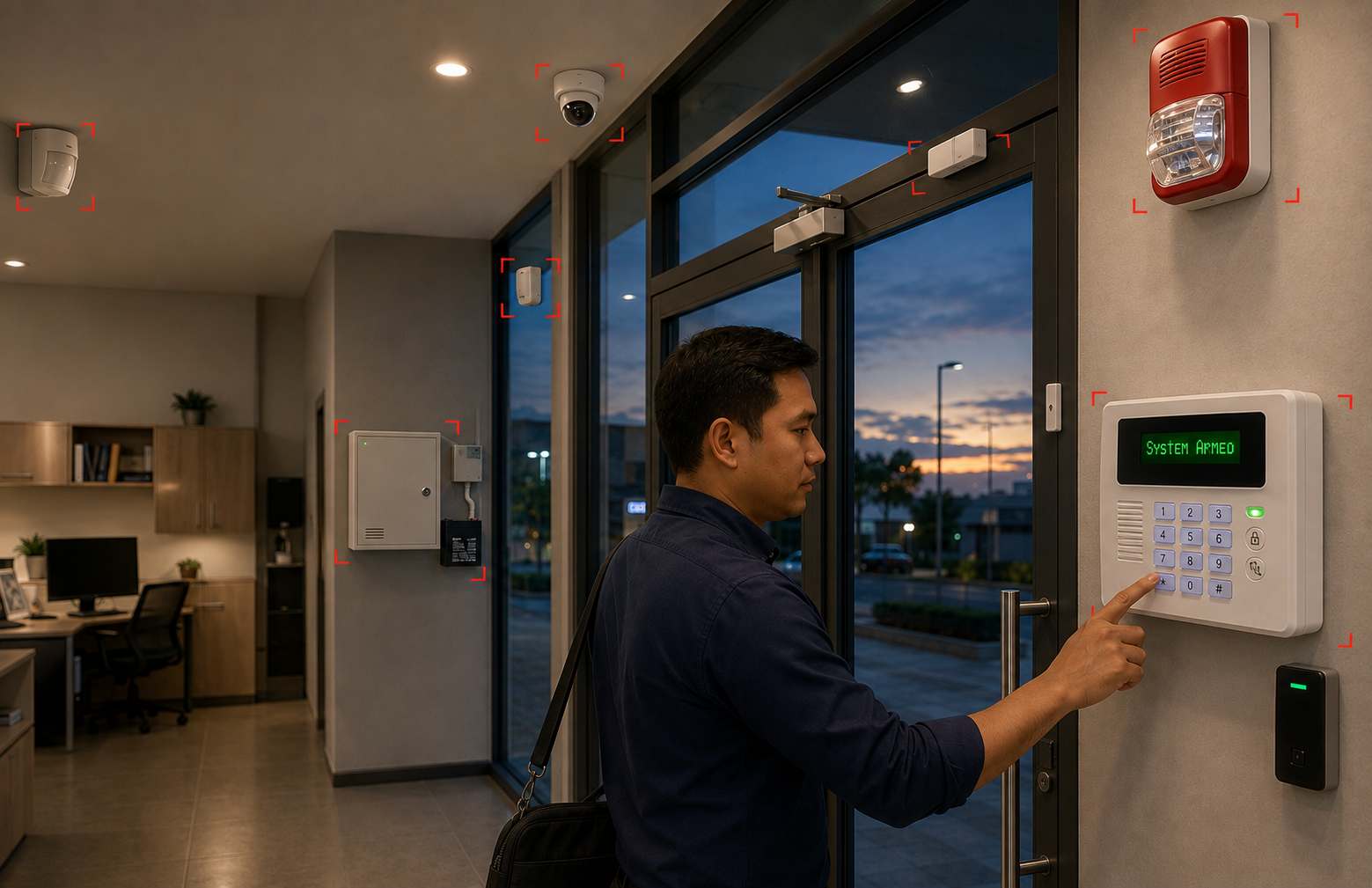
What Are Intrusion Alarm Systems?
Intrusion Alarm Systems Philippines are security solutions designed to detect unauthorized entry or suspicious activity within buildings, restricted areas, and protected properties. These systems continuously monitor selected areas using sensors, detectors, control panels, communication devices, and alarm notification equipment.
A typical Intrusion Alarm System may include a central control panel, motion sensors, door and window contacts, glass-break detectors, vibration sensors, sirens, strobe lights, communication modules, and monitoring interfaces. Depending on facility requirements, organizations may use wired, wireless, monitored, unmonitored, hybrid, or cloud-connected systems.
Modern intrusion alarm systems can also work alongside CCTV, Access Control Systems, Building Management Systems (BMS), perimeter security, and remote monitoring platforms to provide a more coordinated security environment.
Why Choose Intrusion Alarm Systems?
Commercial facilities may contain valuable equipment, business information, inventory, critical infrastructure, and restricted areas that require protection against unauthorized access. Intrusion Alarm Systems Philippines provide continuous monitoring that can help identify suspicious activity and alert authorized personnel when configured security conditions occur.
Sensors can monitor doors, windows, corridors, restricted rooms, facility perimeters, and other potential entry points. When abnormal activity is detected, the system can activate audible or visual alarms and send notifications to security personnel or monitoring services depending on its configuration.
Integration with CCTV can also allow security teams to review video associated with an alarm event, while Access Control integration can provide additional information about activity around secured entry points.
Scalable systems can support additional sensors, security zones, and monitoring capabilities as facilities expand or security requirements change.
How Intrusion Alarm Systems Work
Intrusion alarm systems begin with sensors installed at selected security points. These may include motion sensors, magnetic door and window contacts, glass-break detectors, vibration sensors, infrared beam detectors, and other compatible detection technologies.
When a sensor detects activity that meets its configured alarm conditions, it sends a signal to the central alarm control panel. The panel processes the information and determines the appropriate response according to programmed security rules.
The system may then activate sirens or strobe lights, generate mobile notifications, or send alerts to security personnel or a monitoring service depending on the configuration.
When integrated with compatible CCTV, Access Control, perimeter protection, or Building Management Systems, the alarm event may also trigger additional security actions or provide information that helps authorized personnel assess the situation.
Regular monitoring and preventive maintenance help ensure that sensors, control panels, batteries, communication equipment, and other components remain operational.
Intrusion Alarm Systems Safety & Trust
Intrusion alarm systems should be designed according to the specific security risks and operational requirements of each facility. A security assessment can help identify vulnerable entry points, restricted areas, valuable assets, and locations where sensors may provide useful coverage.
Sensor placement and configuration are particularly important because environmental conditions, incorrect positioning, or inappropriate settings can contribute to false alarms. Proper testing and calibration can help improve detection reliability.
Connected and remotely accessible security systems should also include appropriate cybersecurity measures. Secure authentication, network protection, software updates, and controlled administrative access can help protect IP- and cloud-connected security infrastructure.
Regular inspection, testing, battery replacement, software updates, and preventive maintenance should be performed to maintain dependable operation throughout the system’s lifecycle.
Intrusion Alarm Systems Tips
• Conduct a security assessment before selecting equipment.
• Identify vulnerable entry points and restricted areas that require monitoring.
• Position sensors according to their intended detection environment.
• Combine intrusion detection with CCTV and Access Control where appropriate.
• Configure security zones according to operational requirements.
• Test sensors, alarms, communication devices, and backup power regularly.
• Maintain batteries, software, and connected security equipment.
• Train authorized personnel to manage alarms and security events.
Detect Unauthorized Activity Before It Escalates
Commercial security requires more than simply recording events after they occur. A properly planned Intrusion Alarm Systems Philippines environment can provide active monitoring of doors, windows, restricted spaces, facility perimeters, and other vulnerable areas.
Integrating intrusion detection with CCTV, Access Control, and other compatible security technologies can also give security personnel additional information when investigating alarm events.
A professional assessment can help determine the appropriate sensor types, control panel capacity, security zones, notification methods, integration requirements, and monitoring approach for the facility.
Frequently Asked Questions
What is an intrusion alarm system?
An intrusion alarm system is the security system which detects any suspicious entry into a protected structure through use of various sensors and detectors which connect with the main control panel. When suspicious activities are detected, alarms are triggered, notifications are sent and security measures are set in motion in order to ensure people’s safety and protection of business.
What devices are commonly included in an intrusion alarm system?
The list of equipment which is usually installed in an intrusion alarm system may include the control panel, motion detectors, window and door sensors, glass break detectors, vibration sensors, keypads, sirens, strobe lights, communication modules and mobile applications for monitoring. Modern intrusion alarm systems often are integrated with the CCTV camera systems, access control systems and BMS.
What is the difference between wired and wireless intrusion alarm systems?
The wired systems use wired communication technology while wireless systems use radio signals. The wired systems are widely used in new constructions and installations. The wireless systems can be installed even in existing buildings and structures.
Can intrusion alarm systems be integrated with CCTV and access control?
Certainly. Current intrusion alarm systems can be integrated with CCTV surveillance, access control, perimeter security, and Building Management Systems. Through the use of integration, centralized monitoring, real-time event verification, automatic response of security system, and awareness can be assured for the entire building.
Why is preventive maintenance important for intrusion alarm systems?
Inspection, testing, software updating, battery changing, and maintenance assist in making sure that sensors, communications equipment, and alarm control panels are fully functioning. Maintenance ensures that there is minimal false alarms and enhances equipment longevity in addition to providing adequate protection from potential security risks.
Act Now: Strengthen Your Facility’s Security Today With Foxcon
Protect critical areas with properly planned Intrusion Alarm Systems designed around your facility’s security requirements. Whether you need system assessment, equipment installation, integration, testing, or maintenance, Foxcon Total Solutions Inc. can help strengthen your commercial security infrastructure.
📞 Contact us today to discuss your intrusion detection and security requirements.
📍 Serving businesses in Cebu, Metro Manila, and nationwide.
🌐 Explore Foxcon’s solutions to learn more about our services.