


News and Events
Low Voltage Systems Philippines: Connecting the Technology Behind Modern Facilities
🔌 What Are Low Voltage Systems?
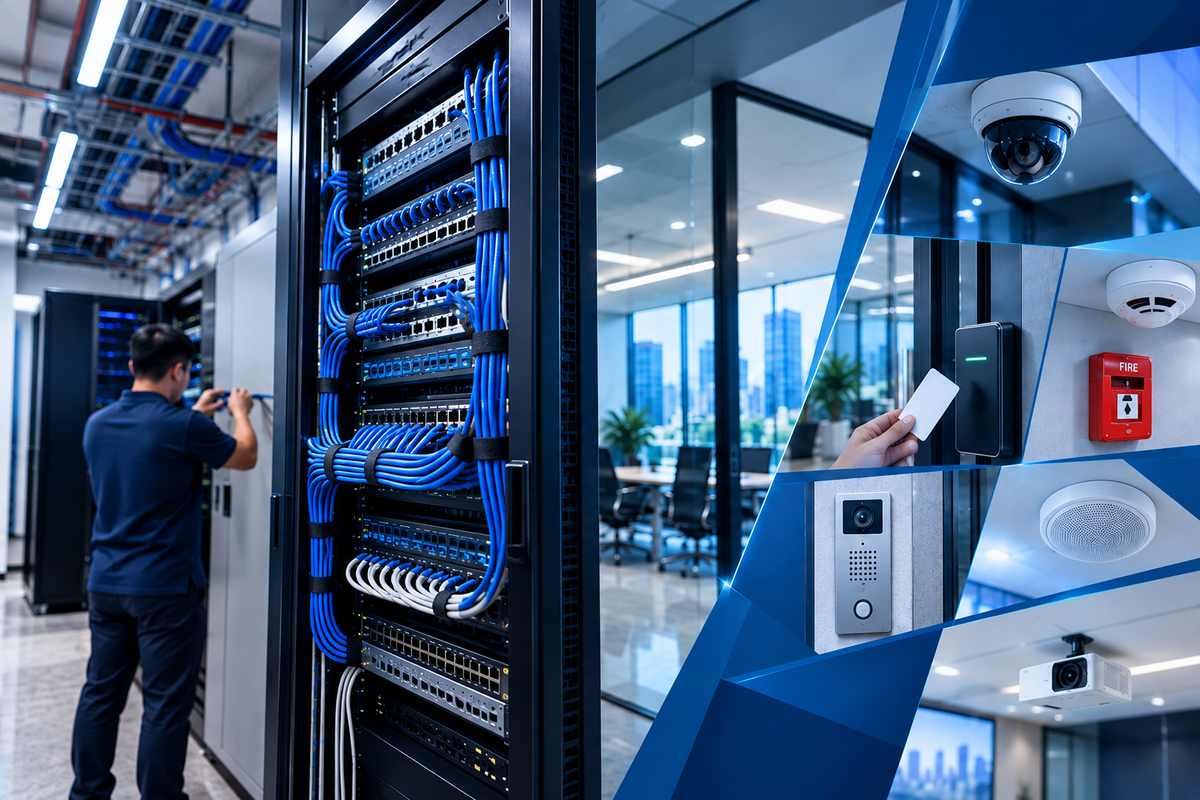
Low Voltage Systems Philippines supports many of the technologies used throughout a building every day, from security cameras and access readers to network connections, intercoms, alarms, and audio systems. Unlike the electrical circuits that power lighting, air-conditioning, and heavy equipment, these systems are mainly used for communication, monitoring, security, and control.
The term covers several types of building technology rather than one specific system. Depending on the property, low voltage infrastructure can support CCTV, Access Control Systems, Structured Cabling, Network Infrastructure, Public Address Systems, Building Intercom Systems, Audio Visual Solutions, Fire Detection and Alarm Systems, and Building Management Systems.
Although these technologies perform different functions, they often depend on shared cable routes, network connections, equipment rooms, and other infrastructure. Planning them together can make installation and future maintenance easier.
Foxcon Total Solutions, Inc. provides Low Voltage Systems for offices, manufacturing facilities, hospitals, schools, hotels, retail establishments, government facilities, and other commercial properties.
🏢 Why Choose Low Voltage Systems?
A modern building depends on more than electricity. Employees need network connections. Security teams need cameras and controlled entrances. Reception areas may use intercoms, while meeting spaces depend on audiovisual equipment. All of these technologies need properly planned infrastructure behind them.
A well-planned Low Voltage System keeps cables, devices, controllers, and equipment organized according to how the facility operates. This becomes particularly important when several systems are being installed during the same construction or renovation project.
Planning also affects future changes. A business may start with a limited number of cameras, access-controlled doors, or network points and add more as the facility expands. If cable routes, equipment spaces, and network capacity are considered from the beginning, those additions can be easier to manage.
Integration can provide additional benefits when there is a clear reason for systems to exchange information. However, not every low voltage system needs to connect with every other system. Integration should address an operational requirement rather than add unnecessary complexity.
⚙️ How Low Voltage Systems Work
Each low voltage system has its own equipment and purpose. A CCTV system uses cameras and recording equipment to monitor selected areas. Access Control Systems use readers, controllers, credentials, and electronic locks to manage entry. Structured Cabling provides physical connections for network devices, while Building Intercom and Public Address Systems support communication.
These systems may use dedicated cables or connect through the facility’s network, depending on their design. The infrastructure behind them is just as important as the visible devices. Cable pathways need to be planned, equipment needs suitable locations, and connections should be clearly labeled and documented.
Some compatible systems can also share information. For example, an access control event may be associated with nearby CCTV footage, giving security personnel additional information when reviewing an entry attempt.
The exact setup should be based on the building’s requirements rather than forcing every technology into the same configuration.
🛡️ Low Voltage Systems Safety & Trust
Low voltage does not mean installation can be treated casually. Cables still need appropriate pathways, separation, termination, labeling, and protection. Poor cable management can make troubleshooting difficult and create unnecessary problems when equipment is replaced or additional systems are installed.
Equipment rooms and cabinets also need enough space for organized installation and future servicing. When devices from several systems are placed in an area without proper planning, maintenance becomes more difficult.
Network-connected devices require another layer of attention. Cameras, access controllers, intercoms, and other connected equipment should use controlled accounts, appropriate network settings, and current software or firmware where applicable.
Documentation should also remain current. Cable labels, equipment locations, network details, and system drawings are especially useful when technicians need to identify a problem or modify the infrastructure years after installation. Testing should be completed before turnover and repeated during scheduled maintenance to confirm that equipment and connections continue to work as intended.
💡 Low Voltage Systems Tips
● Plan cable pathways before walls, ceilings, and equipment rooms are finalized.
● Keep low voltage cabling organized and clearly labeled at both ends.
● Allow enough room in racks, cabinets, and pathways for future expansion.
● Choose equipment according to the building’s actual requirements rather than adding unnecessary features.
● Document cable routes, device locations, and important system connections.
● Coordinate network requirements before installing IP-based cameras, intercoms, access control, and other connected devices.
● Protect equipment rooms and cabinets from unauthorized access.
● Avoid adding new devices without checking available network, rack, cable, and power capacity.
● Test completed connections and equipment before project turnover.
● Update documentation whenever the system is expanded or changed.
📡 Plan the Infrastructure Before Adding More Devices
One of the easiest ways to make a low voltage project more difficult is to consider each device separately. A company may know that it needs 30 CCTV cameras, 10 access-controlled doors, wireless access points, meeting room equipment, and several intercom stations. However, those devices also need cable routes, network ports, rack space, equipment locations, and connections to the appropriate systems.
If that infrastructure is planned late, installers may have to work around finished ceilings, occupied spaces, crowded pathways, or equipment rooms that were not designed to accommodate the additional technology. Planning the supporting infrastructure first gives each system a clearer place within the building.
It also makes future expansion easier. When a company adds another floor, department, security area, or group of network devices, facility teams can determine whether existing pathways and equipment have enough capacity instead of rebuilding parts of the installation.
A professional site assessment can help determine which systems are needed, where equipment should be located, how cables should be routed, and where capacity should be reserved for future changes.
❓ Frequently Asked Questions
What are Low Voltage Systems?
Low Voltage Systems operate at lower voltage levels and support communication, security, monitoring, networking, automation, and other building technologies within commercial and industrial facilities.
What systems are considered Low Voltage Systems?
Common Low Voltage Systems include CCTV surveillance, Access Control Systems, Fire Detection and Alarm Systems, Public Address Systems, Building Management Systems (BMS), Structured Cabling, Network Infrastructure, Audio Visual Solutions, and Building Intercom Systems.
Where are Low Voltage Systems commonly installed?
Low Voltage Systems are commonly used in office buildings, hospitals, schools, hotels, warehouses, manufacturing facilities, retail establishments, government offices, and other commercial properties that require security, communication, networking, monitoring, and other building technologies.
Can Low Voltage Systems integrate with other building technologies?
Yes. Many Low Voltage Systems can integrate with compatible building technologies to support centralized monitoring, communication, security, and selected automated functions.
Why are Low Voltage Systems important for commercial facilities?
Low Voltage Systems provide the infrastructure needed for security, communication, networking, monitoring, and other technologies used throughout modern commercial facilities.
Why is preventive maintenance important for Low Voltage Systems?
Routine inspections, software updates, equipment testing, and preventive maintenance can help identify failing devices, damaged connections, network issues, and other problems before they affect normal operations.
🚀 Power Better Building Connectivity With Low-Voltage Systems
Bring your security, communication, network, and monitoring technologies together with properly planned Low Voltage Systems. Foxcon Total Solutions, Inc. can support your project through engineering, installation, integration, testing, commissioning, and preventive maintenance.
📞 Contact us today to discuss your low-voltage system requirements.
📍 Serving businesses in Cebu, Metro Manila, and nationwide.
🌐 Explore Foxcon’s solutions to learn more about our services.