


News and Events
Building Technology Integration Services Philippines: Connecting Security, Network, AV, and Automation Systems
🔗 What Are Building Technology Integration Services?
Building Technology Integration Services Philippines bring different building systems into a coordinated operating environment so compatible technologies can exchange information, support shared workflows, and be managed more efficiently.
Modern facilities may contain CCTV Surveillance Systems, Access Control Systems, Fire Detection and Alarm Systems, Public Address Systems, Building Intercom Systems, Structured Cabling, Data Networks, Audio Visual Systems, Building Management Systems, and other connected technologies.
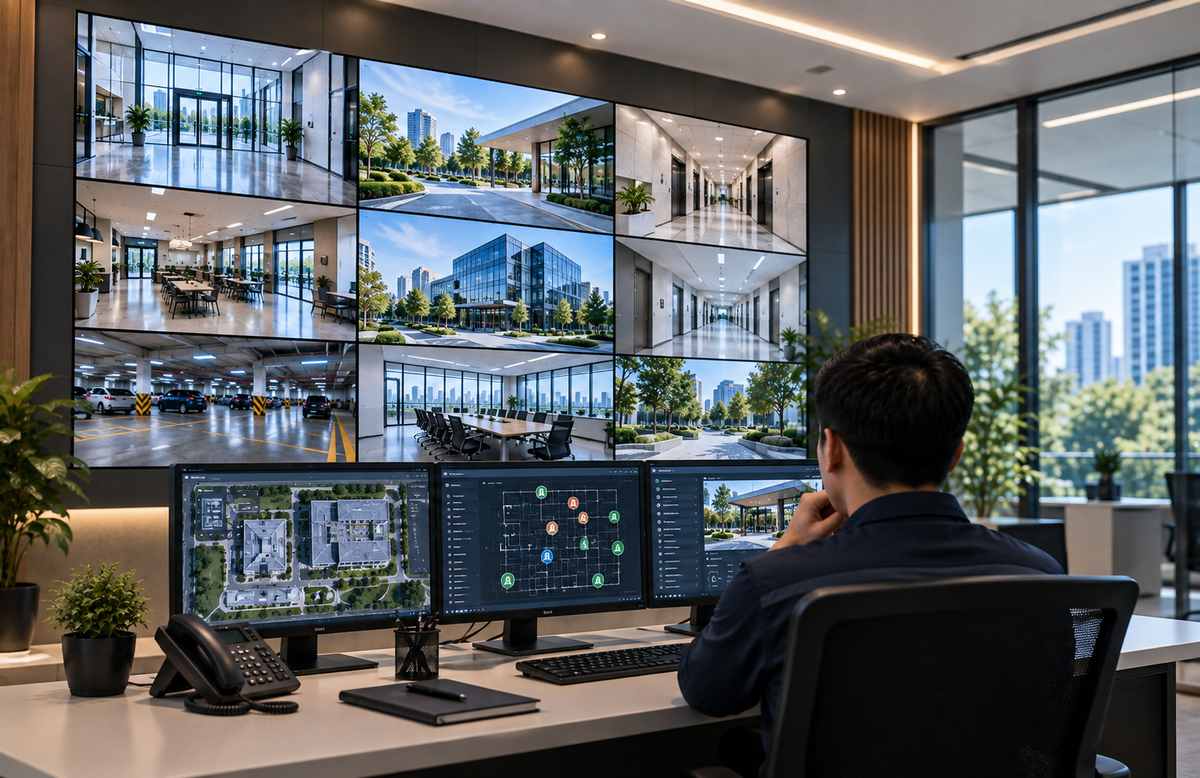
Each system can operate independently, but integration can provide additional operational value when there is a clear reason for systems to communicate. For example, an access control event may be associated with nearby CCTV footage, while selected building alarms may be displayed through a centralized monitoring platform.
Foxcon Total Solutions, Inc. provides Building Technology Integration Services for commercial buildings, corporate offices, hospitals, hotels, educational institutions, manufacturing facilities, government facilities, and other projects requiring coordinated building technologies.
🏢 Why Choose Building Technology Integration Services?
Managing several building systems separately can require facility teams to monitor different software platforms, equipment panels, user accounts, and communication interfaces.
Building Technology Integration Services Philippines can help simplify selected workflows by connecting compatible systems where integration provides a practical operational benefit.
Integration can support centralized monitoring, coordinated alarms, shared event information, automated responses, and more organized system management. It can also reduce the need for operators to move between multiple platforms when responding to incidents or reviewing facility conditions.
However, successful integration does not mean connecting every system to every other system. Each interface should support a defined operational requirement. Unnecessary integrations can increase configuration complexity, maintenance requirements, and troubleshooting difficulty.
⚙️ How Building Technology Integration Services Work
The integration process generally begins with a review of the systems that need to communicate. Technical teams identify equipment models, software platforms, network requirements, communication protocols, available interfaces, and the operational workflows the integration is expected to support.
Depending on the project, integration may involve:
● CCTV Surveillance Systems
● Access Control Systems
● Fire Detection and Alarm Systems
● Public Address Systems
● Building Intercom Systems
● Structured Cabling
● Data Networks
● Audio Visual Systems
● Building Management Systems
● Other compatible building technologies
Systems may exchange information through network connections, software interfaces, application programming interfaces, gateways, relays, communication protocols, or other supported integration methods.
Configuration and programming are then completed according to the required workflow. For example, an event from one system may trigger a notification, display information on another platform, or initiate a supported automated response.
After configuration, individual systems and integrated workflows should be tested before final turnover.
🛡️ Building Technology Integration Services Safety & Trust
Integrated systems depend on stable communication, compatible interfaces, secure network architecture, accurate configuration, and clear documentation.
Changes to one system can sometimes affect another connected platform. Software updates, firmware changes, network modifications, device replacements, or configuration changes should therefore be reviewed when systems share integrations.
Cybersecurity is also important because many modern building technologies communicate through IP networks. User accounts, authentication, network segmentation, software updates, access permissions, and monitoring should be considered according to project requirements.
Life-safety systems require additional care. Integrations involving Fire Detection and Alarm Systems or other emergency technologies should follow approved system design, applicable codes, manufacturer requirements, and project specifications.
Documentation should identify important interfaces, communication paths, device addresses, network information, software settings, and testing results so future technicians can understand how the systems interact.
Foxcon Total Solutions, Inc. supports integrated projects through Engineering and Design, Supply and Installation, Project Implementation, System Integration, Testing and Commissioning, Preventive Maintenance, and Supply and Replacement services.
💡 Building Technology Integration Services Tips
● Define the operational workflow before designing the integration.
● Confirm that equipment and software platforms support the required interfaces.
● Avoid unnecessary integrations that do not provide a clear operational benefit.
● Coordinate network requirements for IP-based systems.
● Document device addresses, communication settings, and software configurations.
● Protect connected systems with appropriate cybersecurity controls.
● Test individual systems before testing integrated workflows.
● Review integrations after major software, firmware, or network changes.
● Train authorized personnel to understand how connected systems interact.
● Maintain current system diagrams and configuration records.
🔗 Integrate Around Real Facility Workflows, Not Every Available Feature
Technology platforms may offer many possible integration features, but a useful integration should begin with a real operational requirement.
Consider a facility with CCTV, access control, intercom, fire detection, and a Building Management System. It may be technically possible to connect several of these platforms, but the project team should first determine what information operators actually need.
Security personnel may benefit from associating an access control event with nearby CCTV footage. Facility personnel may need selected equipment alarms displayed through a centralized monitoring platform. Reception staff may need an intercom event linked to an access control workflow.
These are specific operational requirements that can guide the integration design.
Connecting systems simply because an interface is available can create unnecessary dependencies and make troubleshooting more difficult. Integration should therefore focus on workflows that improve monitoring, response, communication, or facility management.
❓ Frequently Asked Questions
What are Building Technology Integration Services?
Building Technology Integration Services connect compatible building systems so they can exchange information, support coordinated workflows, and provide more centralized monitoring or control.
What systems can be integrated?
Depending on compatibility and project requirements, systems may include CCTV, access control, fire detection and alarm, public address, intercom, structured cabling, data networks, audio visual systems, Building Management Systems, and other connected technologies.
Do all building systems need to be integrated?
No. Integration should be based on actual operational requirements. Systems that do not need to exchange information can continue operating independently.
Can existing building systems be integrated with newer technologies?
Yes, when compatible interfaces, protocols, gateways, software, or other supported integration methods are available.
Why is network infrastructure important for system integration?
Many modern building technologies communicate through IP networks. Reliable switching, structured cabling, addressing, segmentation, bandwidth, and network configuration can therefore affect integrated system performance.
Does system integration require programming?
Many integrations require configuration, programming, software setup, interface development, or gateway configuration depending on the technologies involved.
How are integrated systems tested?
Testing should verify both the individual systems and the required workflows between them. This may include communication checks, event triggers, notifications, control responses, and failure conditions according to project requirements.
🚀 Connect Building Technologies Around the Way Your Facility Actually Operates
Bring security, network, communication, AV, automation, and other compatible technologies into a coordinated environment through Building Technology Integration Services Philippines. Foxcon Total Solutions, Inc. can support projects from system assessment and engineering through integration, configuration, testing, commissioning, documentation, and long-term maintenance.
📞 Contact us today to discuss your building technology integration requirements.
📍 Serving businesses in Cebu, Metro Manila, and nationwide.
🌐 Explore Foxcon’s solutions to learn more about our services.