


News and Events
Electrical Panel Solutions Philippines: Supporting Safe Power Distribution in Commercial Facilities
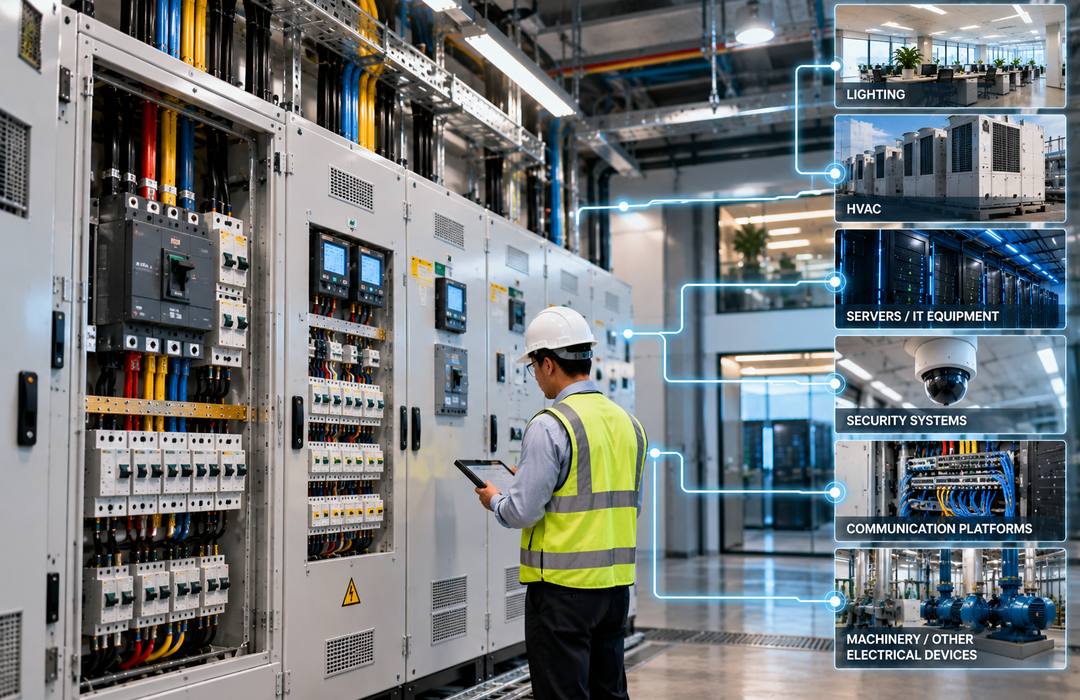
What Are Electrical Panel Solutions?
Electrical Panel Solutions Philippines are structured electrical systems used to receive, distribute, control, and protect power within commercial, industrial, and institutional facilities.
Electrical panels provide a central location where circuits can be organized and connected to specific building loads such as lighting, HVAC equipment, servers, security systems, communication platforms, machinery, and other electrical devices.
Depending on the project, panel solutions may include main distribution panels, subpanels, circuit breakers, control panels, metering equipment, busbars, protective devices, and other components required for organized electrical distribution.
Foxcon Total Solutions, Inc. provides electrical works and power infrastructure solutions that can support dependable electrical systems for commercial and industrial environments.
Why Choose Electrical Panel Solutions?
As facilities expand, electrical demand becomes more complex. Different systems may require separate circuits, different protective devices, dedicated power sources, or specific distribution arrangements. Without proper planning, circuit identification, maintenance, and future expansion can become difficult.
Electrical Panel Solutions provide a structured method for dividing electrical loads according to equipment, location, and operational requirements. This makes it easier for technical teams to identify circuits during maintenance, troubleshooting, upgrades, and emergency isolation.
A properly planned panel system can also support future growth. When organizations add new equipment, expand departments, increase HVAC capacity, or install additional technology systems, available panel space and electrical capacity become important considerations.
Electrical panels can work alongside Power Distribution Systems, Backup Power Systems, UPS Solutions, Power Monitoring Systems, and Data Center Power Distribution to create a more coordinated electrical environment.
How Electrical Panel Solutions Work
Electrical panels receive power from an upstream electrical source and distribute it to individual circuits. A main distribution panel may receive the primary facility supply, while downstream panels or subpanels distribute power to specific floors, departments, equipment rooms, or operational areas.
Circuit breakers and other protective devices are installed according to the electrical design. These devices are intended to interrupt current when certain abnormal conditions occur, helping protect conductors and connected equipment.
A typical panel environment may include:
-
Main breakers
-
Branch circuit breakers
-
Busbars
-
Neutral and grounding terminals
-
Metering equipment
-
Control devices
-
Surge protection where required
-
Monitoring components
-
Panel schedules and identification labels
Control panels may also be used for specific equipment or processes. Unlike a standard distribution panel, a control panel may include contactors, relays, motor starters, variable frequency drives, control transformers, programmable logic controllers, or other components depending on the application.
Electrical Panel Solutions Safety & Trust
Electrical panels should be designed around actual electrical demand, equipment characteristics, available fault current, circuit requirements, environmental conditions, and applicable project standards. Panel capacity should not be determined only by the number of empty breaker spaces.
A panel may still have unused physical space while its electrical load or upstream capacity is already close to its allowable design limit. Proper conductor sizing, grounding, protective device selection, enclosure rating, circuit identification, and equipment clearances are all important.
Environmental conditions should also be considered. Panels installed in dusty, humid, outdoor, industrial, or corrosive areas may require enclosures and equipment suitable for those conditions.
Only authorized and qualified personnel should perform installation, modification, inspection, or maintenance work on electrical panels. Updated panel schedules and electrical diagrams should also be maintained so technical teams can identify circuits and understand changes made over time.
Foxcon Total Solutions, Inc. supports Electrical Works through Engineering and Design, Supply and Installation, Project Implementation, Testing and Commissioning, Preventive Maintenance, and related technical services.
Electrical Panel Solutions Tips
-
Calculate electrical demand before selecting the panel. Use actual load requirements instead of estimating from breaker count.
-
Plan for reasonable future capacity. Expansion may require additional circuits and electrical load.
-
Label circuits clearly. Breaker descriptions should match actual connected loads.
-
Keep panel schedules updated. Documentation should reflect field changes.
-
Check enclosure requirements. Panel type should suit the installation environment.
-
Maintain proper access. Avoid obstructing electrical panels with storage or equipment.
-
Inspect for abnormal conditions. Unusual heat, discoloration, odor, noise, or repeated breaker trips should be investigated.
-
Coordinate upstream and downstream protection. Protective devices should be selected as part of the overall electrical design.
-
Review load changes before adding equipment. New machinery, HVAC units, or IT infrastructure may affect panel capacity.
-
Test before turnover. Verify circuit identification, protective devices, connections, and intended operation.
Check Electrical Capacity Before Adding Another Breaker
One common mistake is assuming that an electrical panel can accept more load simply because it still has empty breaker positions. Physical breaker space and electrical capacity are not the same thing.
For example, a facility may have several unused spaces in a subpanel, but the upstream feeder may already be carrying a substantial load. Adding new equipment without reviewing the connected load, feeder capacity, protective devices, and upstream distribution can create problems even though the new breaker physically fits.
The same applies when replacing older equipment. A new HVAC unit, server rack, machine, or production device may have different electrical requirements from the equipment it replaces.
Before adding a new circuit, the complete distribution path should be reviewed. This includes the proposed branch circuit, panel load, feeder capacity, upstream breaker, available system capacity, and any backup or UPS infrastructure associated with the equipment. Planning around electrical capacity rather than empty panel space helps reduce unnecessary rework and supports safer expansion.
Frequently Asked Questions
What is an electrical panel?
An electrical panel is an enclosure that receives electrical power and distributes it to individual circuits serving equipment, lighting, outlets, and other building loads.
What is the purpose of a circuit breaker?
A circuit breaker is a protective device designed to interrupt current when certain abnormal electrical conditions occur, helping protect wiring and connected equipment.
What is the difference between a main panel and a subpanel?
A main panel receives power from the primary electrical source or upstream distribution system, while a subpanel distributes power to a specific area or group of circuits.
What is an electrical control panel?
A control panel is used to manage the operation of machinery, motors, HVAC systems, or other equipment. Depending on the application, it may contain relays, contactors, motor starters, controllers, or variable frequency drives.
Can an electrical panel support future expansion?
Yes, but future expansion depends on both available physical space and electrical capacity. Empty breaker slots alone do not confirm that additional load can be added.
Why is panel labeling important?
Clear labels help authorized personnel quickly identify circuits during maintenance, troubleshooting, isolation, and emergency response.
When should an electrical panel be inspected?
Panels should be inspected according to facility maintenance requirements and whenever there are signs such as repeated breaker trips, unusual heating, damaged components, loose connections, or major changes in electrical load.
Review the Load Before Using the Spare Breaker Space
Support organized and reliable power distribution with professionally planned Electrical Panel Solutions Philippines. From electrical load assessment and panel design to equipment supply, installation, testing, commissioning, and maintenance, Foxcon Total Solutions, Inc. can help organizations develop electrical infrastructure around actual operational requirements.
📞 Contact us today to discuss your electrical panel and power distribution requirements.
📍 Serving businesses in Cebu, Metro Manila, and nationwide.
🌐 Explore Foxcon’s solutions to learn more about our services.
References
-
Schneider Electric Philippines – Panel Building Systems
https://www.se.com/ph/en/product-subcategory/23877549-panel-building-systems/ -
Paya Press – Types of Electrical Panels
https://payapress.com/all-types-of-electrical-panels-simple-u-s-guide/ -
S&R Electrical – Electrical Control Panels and Their Purpose
https://www.srelectrical.com/news/the-essentials-of-electrical-control-panels-and-why-you-need-one/ -
Simcona – Electrical Control Panel Components
https://simcona.com/blog/electrical-control-panel-components -
MZN Power – Electrical Panel Boards
https://mznpower.com/electrical-panel-boards/