


News and Events
Network Rehabilitation Services Philippines: Restoring and Upgrading Business Network Infrastructure
What Are Network Rehabilitation Services?
Network Rehabilitation Services Philippines involve assessing, repairing, upgrading, and restoring existing network infrastructure to improve connectivity, reliability, and overall system performance.
Over time, business networks may experience connectivity problems caused by aging cables, damaged connections, outdated networking equipment, poor cable management, or infrastructure that can no longer support current operational requirements.
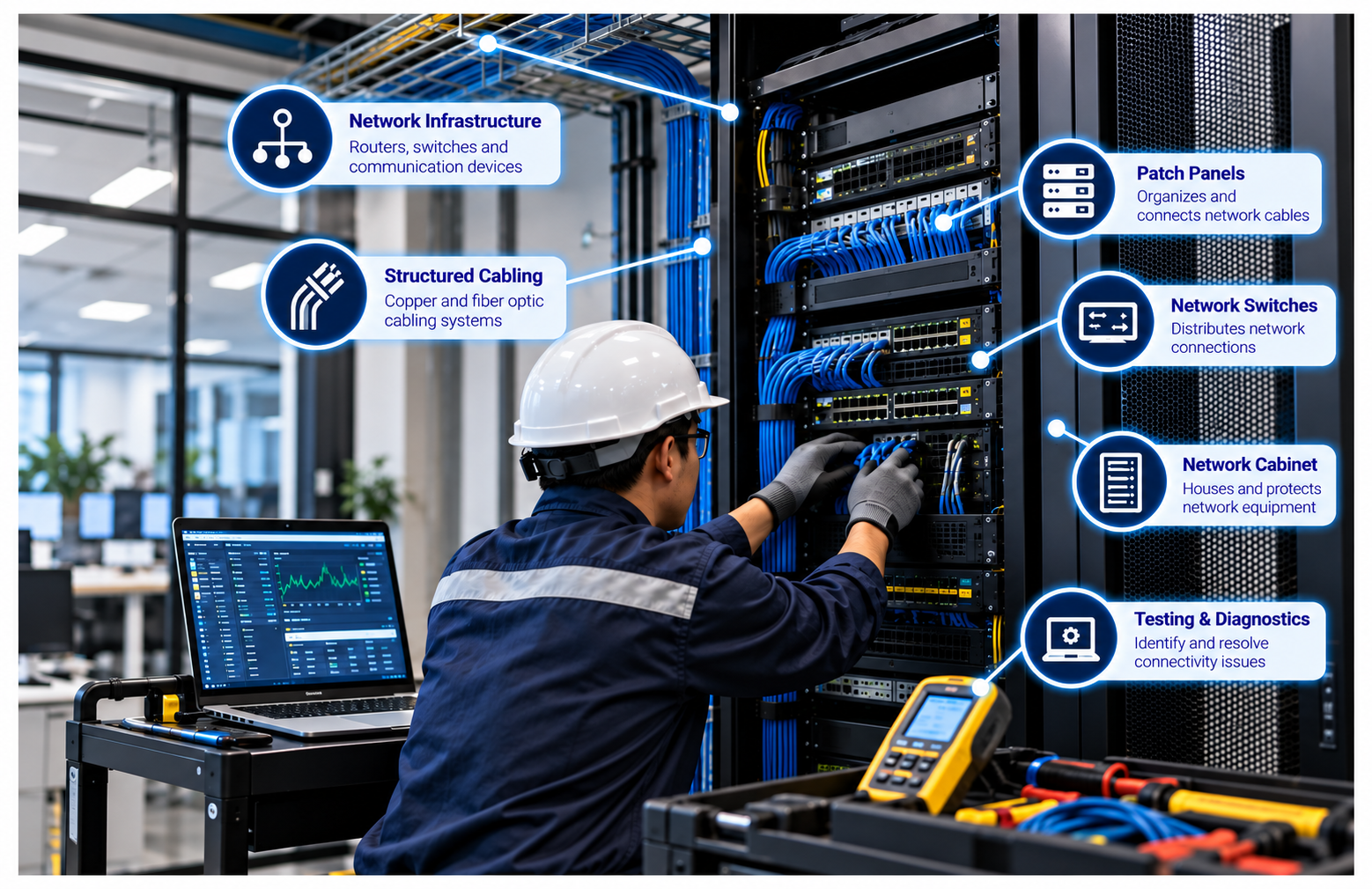
Network rehabilitation focuses on identifying these problems and determining which components require repair, replacement, reconfiguration, or upgrading. Depending on the facility, rehabilitation may involve structured cabling, fiber optic connections, network switches, routers, patch panels, network cabinets, and other communication infrastructure.
Foxcon Total Solutions, Inc. provides network infrastructure and related technical services that can support organizations in evaluating existing network systems, addressing connectivity issues, and improving business communication infrastructure.
Why Choose Network Rehabilitation Services?
Business networks support essential operations such as internet connectivity, internal communication, cloud applications, IP telephony, surveillance systems, and access to shared company resources. When network infrastructure becomes unreliable, these operations may experience slow connections, intermittent outages, and reduced productivity.
Network Rehabilitation Services Philippines help organizations address existing infrastructure problems without automatically requiring a complete network replacement. Through proper assessment, technical teams can identify which cables, connections, equipment, or network segments can remain in service and which require corrective work.
For example, a commercial building may experience recurring connectivity interruptions because of damaged network cables, poorly terminated connections, aging switches, or overloaded network links. A structured rehabilitation process can help identify the underlying causes and determine appropriate repairs or upgrades.
Network rehabilitation can also support Structured Cabling Systems, Fiber Optic Cabling, Network Infrastructure Solutions, Enterprise Wi-Fi Solutions, IP Camera Systems, IP Telephony Solutions, and other technologies that depend on stable network connectivity.
How Network Rehabilitation Services Work
Network rehabilitation typically begins with an assessment of the existing infrastructure. Technical personnel inspect relevant network components, review available documentation, identify reported connectivity issues, and determine which parts of the network require further testing.
The assessment may include checking copper and fiber optic cables, patch panels, network switches, routers, network cabinets, equipment connections, and communication pathways. Where appropriate, cable testing and network diagnostic tools can help identify faulty terminations, damaged links, connection errors, and performance limitations.
After identifying the issues, a rehabilitation plan can be developed. Depending on the findings, corrective work may include replacing damaged cables, repairing terminations, reorganizing network connections, upgrading outdated equipment, improving cable routing, or adjusting compatible network configurations. The actual work should be based on the condition of the existing infrastructure and the operational requirements of the facility.
Once rehabilitation activities are completed, the affected network components should undergo appropriate testing and verification. Connectivity checks, cable testing, equipment inspection, performance validation, and updated documentation help confirm whether the rehabilitated infrastructure meets the project’s requirements.
Network Rehabilitation Safety & Trust
Network rehabilitation should begin with a clear understanding of the existing system. Changes to network infrastructure can affect connected devices, business applications, surveillance systems, communication equipment, and other operational technologies. Proper planning helps reduce the risk of unnecessary service interruptions during rehabilitation.
Physical infrastructure should also be inspected carefully. Damaged cables, exposed connections, unsuitable cable pathways, overloaded network cabinets, and poorly supported equipment may create maintenance and reliability concerns. Cable replacement, equipment installation, and related work should follow applicable technical requirements and appropriate installation practices.
For operational networks, rehabilitation activities should be coordinated with authorized facility and IT personnel. Maintenance schedules, equipment configurations, network documentation, and backup procedures should be reviewed before changes are made. Where possible, critical connections should be identified so that work can be planned around business requirements.
Foxcon Total Solutions, Inc. supports network infrastructure projects through Engineering and Design, Supply and Installation, Project Implementation, Testing and Commissioning, Preventive Maintenance, Supply and Replacement, and related technical services. The specific rehabilitation scope should be determined through site assessment and project requirements.
Network Rehabilitation Services Tips
-
Conduct a network assessment first. Identify existing infrastructure conditions before deciding which components need rehabilitation.
-
Document recurring connectivity problems. Record affected areas, devices, and symptoms to help technical teams investigate.
-
Inspect existing network cabling. Check for damaged cables, poor terminations, unsuitable routing, and other physical issues.
-
Test copper and fiber optic connections. Appropriate testing can help identify faults and determine whether existing links remain suitable.
-
Review aging network equipment. Evaluate switches, routers, and other devices for condition, compatibility, and operational requirements.
-
Organize network connections properly. Clear labeling and cable management can simplify troubleshooting and maintenance.
-
Plan rehabilitation around business operations. Schedule activities to reduce unnecessary disruption to critical systems.
-
Replace components based on assessment results. Avoid replacing functional infrastructure without identifying the actual problem.
-
Verify network performance after rehabilitation. Confirm that affected connections and equipment operate as intended.
-
Maintain updated network documentation. Record completed repairs, equipment changes, cable routes, and test results.
Identify Network Problems Before Replacing Infrastructure
One of the most important parts of network rehabilitation is determining the actual cause of connectivity problems. A slow or unstable network does not always mean that the entire infrastructure needs replacement. The issue may originate from a damaged cable, faulty connector, incorrectly configured switch port, overloaded network segment, or another specific component.
For example, an office may experience intermittent network access in one department while other areas continue operating normally. Replacing all network equipment may not resolve the problem if the actual cause is a damaged cable run or an unreliable connection between a patch panel and network switch.
A systematic assessment helps narrow down the affected area. Technical teams can inspect physical connections, review equipment status, perform appropriate cable tests, and check network performance indicators. These findings help determine whether the solution requires a minor repair, selective component replacement, configuration adjustment, or a broader infrastructure upgrade.
This approach can make rehabilitation more targeted and manageable. Instead of treating every connectivity problem as a reason for complete replacement, organizations can prioritize the components that genuinely require attention while retaining infrastructure that remains suitable for current operational requirements.
Frequently Asked Questions
What are Network Rehabilitation Services?
Network Rehabilitation Services involve assessing, repairing, upgrading, and restoring existing network infrastructure to address connectivity problems, improve reliability, and support current operational requirements.
When does a business need network rehabilitation?
A business may need network rehabilitation when it experiences recurring connectivity interruptions, damaged network cabling, unreliable equipment, poor network organization, or infrastructure that no longer supports its operational needs.
Is network rehabilitation the same as installing a new network?
No. Network rehabilitation focuses on improving or restoring existing infrastructure. A new network installation generally involves deploying a network environment from the beginning. Rehabilitation may include new components when required, but it does not automatically involve replacing the entire system.
What network components can be included in rehabilitation?
Depending on the assessment, rehabilitation may involve structured cabling, fiber optic connections, patch panels, network switches, routers, network cabinets, equipment connections, and other related infrastructure.
Can network rehabilitation improve slow internet or network connections?
It may help when the performance problem originates from damaged cabling, faulty equipment, incorrect configurations, or other issues within the organization’s network infrastructure. However, slow internet service may also result from factors outside the local network, so proper diagnosis is necessary.
Does network rehabilitation require replacing all existing cables?
Not necessarily. Existing cables that remain in good condition and meet the required performance specifications may continue to be used. Replacement decisions should be based on inspection, testing, and project requirements.
Can network rehabilitation be performed while a business is operating?
Depending on the scope of work, some rehabilitation activities may be performed in stages. However, certain repairs, equipment replacements, or network changes may require scheduled interruptions to maintain safety and reduce operational risks.
Why is testing important after network rehabilitation?
Testing helps verify that repaired or upgraded connections, equipment, and network segments operate according to the intended requirements. It also provides information for troubleshooting, documentation, and future maintenance.
Restore Network Reliability Through Proper Assessment and Rehabilitation
From network assessment and infrastructure inspection to structured cabling improvements, component replacement, equipment upgrades, testing, commissioning, and preventive maintenance, Foxcon Total Solutions, Inc. can support organizations in developing network infrastructure improvements based on actual facility conditions and operational requirements.
📞 Contact us today to discuss your network rehabilitation and connectivity infrastructure requirements.
📍 Serving businesses in Cebu, Metro Manila, and nationwide.
🌐 Explore Foxcon’s solutions to learn more about our services.
References
1. Cisco – Troubleshooting TCP/IP
https://www.cisco.com/en/US/docs/internetworking/troubleshooting/guide/tr1907.html
2. Cisco – Troubleshooting LAN Switching Environments
https://www.cisco.com/en/US/docs/internetworking/troubleshooting/guide/tr1923.html
3. Fluke Networks – Network Cable Testing Overview
https://www.flukenetworks.com/expertise/learn-about/cable-testing
4. Fluke Networks – Importance of Cable Verification, Qualification and Certification
https://www.flukenetworks.com/blog/cabling-chronicles/verification-qualification-certification-which-do-i-need
5. IBM – What Is Network Monitoring?
https://www.ibm.com/think/topics/network-monitoring