


News and Events
Cable Tray and Raceway Systems Philippines: Organizing Electrical and Data Cabling Infrastructure
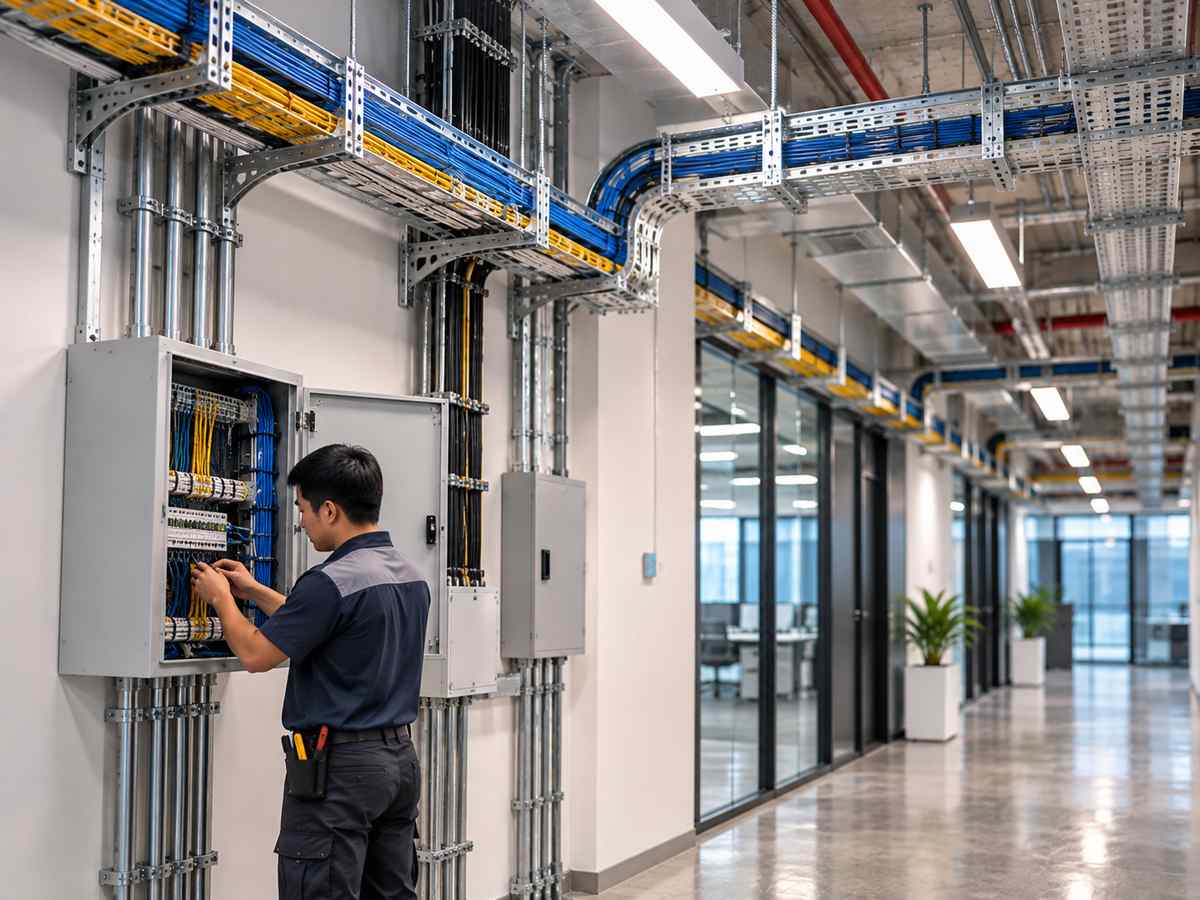
🔌 What Are Cable Tray and Raceway Systems?
Cable Tray and Raceway Systems Philippines provide organized pathways used to route, support, and protect electrical, communication, data, control, and low-voltage cabling throughout a building or facility.
Cable trays are open support systems that allow multiple cables to be routed along horizontal or vertical pathways. Depending on project requirements, these may include ladder-type trays, perforated trays, wire mesh trays, or other approved configurations.
Raceways provide enclosed or partially enclosed pathways for cables and conductors. These may include conduits, surface raceways, trunking, and other systems designed to protect and organize cabling.
Foxcon Total Solutions, Inc. provides Cable Tray and Raceway Systems for commercial buildings, corporate offices, hospitals, hotels, educational institutions, manufacturing facilities, government facilities, data and telecommunications spaces, and other projects requiring organized cable infrastructure.
🏢 Why Choose Cable Tray and Raceway Systems?
Modern facilities contain large quantities of electrical, network, security, communication, automation, and control cabling. Without organized pathways, cables can become difficult to install, inspect, maintain, and expand.
Cable Tray and Raceway Systems Philippines provide defined routes that help keep cabling supported and organized throughout the facility.
Proper pathway planning can also reduce conflicts with mechanical, plumbing, structural, architectural, and other building services. This is especially important above ceilings, inside risers, within equipment rooms, and along other areas where several trades may need to share limited space.
Organized pathways can also support future expansion. When additional network, security, communication, or control cables are required, available pathway capacity can make new installations easier to manage.
⚙️ How Cable Tray and Raceway Systems Work
The process begins by reviewing cable quantities, cable types, equipment locations, floor layouts, risers, telecommunications rooms, electrical rooms, device locations, and other building services.
Depending on the project, pathway systems may include:
● Ladder cable trays
● Perforated cable trays
● Wire mesh cable trays
● Vertical cable trays
● Conduits
● Surface raceways
● Cable trunking
● Supports and brackets
● Cable drops and transitions
● Riser pathways
● Equipment room pathways
● Other approved cable support systems
Pathways are routed between equipment areas and the locations where cables need to terminate. Supports are installed according to the system design, manufacturer requirements, cable loading, and project conditions.
Cables are then installed within or along the approved pathways. Proper routing helps protect cables from unnecessary stress while keeping different cable systems organized.
Where required, pathways may also provide separation between different cable types or building services according to applicable project requirements.
🛡️ Cable Tray and Raceway Systems Safety & Trust
Cable trays and raceways should be designed according to the types and quantities of cables they will support. Overloading pathways can make installation difficult, affect cable organization, and limit future expansion.
Support spacing, pathway loading, cable bend requirements, environmental conditions, and mounting methods should be considered during installation.
Coordination with other building trades is also important. Cable pathways may pass near ducts, pipes, electrical equipment, structural elements, ceilings, lighting, fire protection systems, and other services.
Pathways should remain accessible where maintenance or future cable installation may be required. Installing cable trays in areas that become blocked by permanent building elements can make future work more difficult.
Cable pathways should also be properly documented. Drawings and records can help future technicians understand where cables are routed and where additional pathway capacity may be available.
💡 Cable Tray and Raceway Systems Tips
● Plan cable pathways before ceilings and wall finishes are completed.
● Coordinate routes with electrical, mechanical, plumbing, fire protection, structural, and architectural work.
● Size cable trays according to expected cable quantities and future requirements.
● Avoid filling pathways to maximum capacity during the initial installation.
● Maintain appropriate cable bend requirements.
● Use suitable supports and brackets for the installed pathway system.
● Keep pathway routes accessible where future maintenance may be required.
● Provide appropriate transitions when cable routes change direction or elevation.
● Separate cable systems where required by project specifications or applicable standards.
● Update pathway drawings when routes are changed during construction.
📐 Reserve Pathway Capacity Before Future Cabling Has Nowhere to Go
Cable pathways are often planned around the cables required during the initial construction phase. However, buildings frequently add network devices, security cameras, access control points, communication equipment, sensors, and other technologies after occupancy.
If cable trays and raceways are already full, adding new cables can become more difficult. Installers may need to create additional pathways, reroute existing cables, or work around finished ceilings and occupied areas.
Consider a commercial building where the original cable tray supports structured cabling, CCTV, access control, and communication systems. Several years later, the facility may need additional wireless access points, cameras, sensors, or other network-connected devices.
Reserved pathway capacity gives facility teams more flexibility to add those cables without immediately modifying the entire cable support system.
Planning for reasonable future capacity during the original installation can therefore make later expansion easier and more organized.
❓ Frequently Asked Questions
What is a cable tray system?
A cable tray system is an open support pathway used to route and support multiple electrical, communication, data, control, or low-voltage cables throughout a facility.
What is a raceway system?
A raceway is an enclosed or partially enclosed pathway used to route and protect cables or conductors. Examples may include conduits, surface raceways, and cable trunking.
What types of cable trays are commonly used?
Common types may include ladder cable trays, perforated cable trays, wire mesh cable trays, and other configurations selected according to project requirements.
Why are cable trays important for structured cabling?
Cable trays provide organized pathways that support large quantities of network and communication cables while allowing easier installation, inspection, maintenance, and future expansion.
Can electrical and data cables share the same cable tray?
Cable separation requirements depend on cable types, system design, project specifications, manufacturer requirements, and applicable standards. Pathways should be planned accordingly.
How much spare capacity should a cable tray have?
The appropriate spare capacity depends on the project and expected future requirements. Pathways should be sized to support the initial cable installation while allowing reasonable capacity for future additions.
Can cable trays be installed above ceilings?
Yes. Cable trays are commonly installed above ceilings, but routes should be coordinated with other building services and remain reasonably accessible for installation and maintenance.
🚀 Plan the Cable Pathways Before Other Building Services Block the Route
Create organized infrastructure for electrical, network, security, communication, and control cabling with professionally planned Cable Tray and Raceway Systems Philippines. Foxcon Total Solutions, Inc. can support projects through pathway planning, installation, coordination, cable routing, structured cabling, testing, and documentation.
📞 Contact us today to discuss your cable tray and raceway requirements.
📍 Serving businesses in Cebu, Metro Manila, and nationwide.
🌐 Explore Foxcon’s solutions to learn more about our services.