


News and Events
Power Monitoring Systems Philippines: Improving Electrical Visibility and Supporting Smarter Energy Decisions
What Are Power Monitoring Systems?
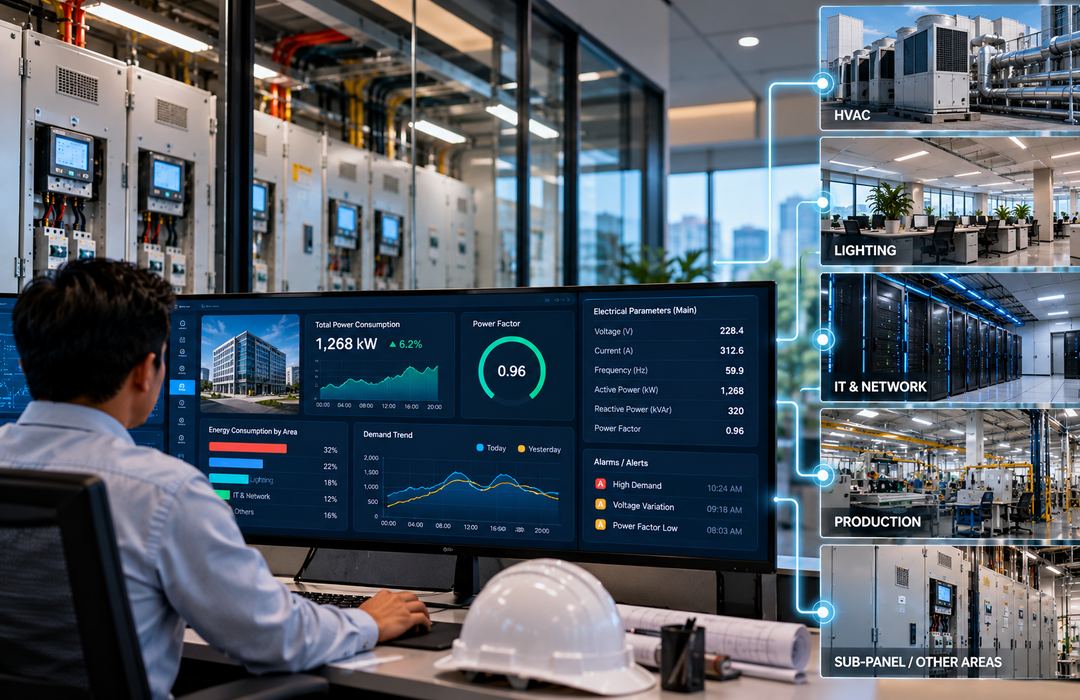
Power Monitoring Systems Philippines are electrical monitoring solutions that measure, collect, and analyze information about how power is being used across a facility.
Depending on the system, monitored parameters may include voltage, current, frequency, power factor, active and reactive power, demand, energy consumption, and other electrical conditions.
These systems are commonly used in commercial buildings, manufacturing facilities, hospitals, hotels, educational institutions, data centers, retail establishments, and industrial environments where electrical reliability and energy visibility are important.
Foxcon Total Solutions, Inc. provides Power Monitoring Systems that can support facility managers and technical teams in understanding electrical performance, identifying abnormal conditions, and improving how electrical infrastructure is managed.
Why Choose Power Monitoring Systems?
Many facilities know how much electricity they consume overall but have limited visibility into where that energy is being used. Power Monitoring Systems provide more detailed information.
Meters can be installed at main distribution points, sub-panels, critical loads, or selected equipment so facility teams can compare consumption and operating conditions across different areas. This can help identify unusual demand, overloaded equipment, poor power factor, voltage conditions, or consumption patterns that deserve further investigation.
Historical data is also useful. Instead of relying only on one-time electrical readings, organizations can review trends over hours, days, weeks, or months to understand how loads change over time.
When integrated with Energy Management Systems, Building Management Systems, Power Distribution Systems, and other facility platforms, power monitoring can provide a clearer picture of how electrical performance relates to overall building operations.
How Power Monitoring Systems Work
Power Monitoring Systems use meters and sensors installed at selected points in the electrical distribution network. These devices measure electrical parameters and send the collected data to monitoring software or a centralized management platform.
Power meters may be installed at the main incoming supply, distribution boards, major equipment, critical circuits, or data center power distribution equipment, depending on the monitoring objective. The software can then display real-time values, historical trends, dashboards, alarms, and reports.
For example, facility personnel may monitor how much power a production area is consuming throughout the day or compare demand between different floors of a commercial building. Some systems can also generate alerts when measured values exceed configured thresholds.
The system itself does not necessarily determine why an electrical problem has occurred. Instead, it provides data that engineers and maintenance personnel can use to investigate the condition more effectively.
Power Monitoring Systems Safety & Trust
Power monitoring equipment is connected to electrical infrastructure, so proper installation and configuration are important. Meters, current transformers, communication devices, and other components should be selected according to the electrical system and the measurements required.
Measurement accuracy also matters. Incorrect current transformer ratios, wiring errors, configuration mistakes, or communication problems can produce misleading information. For that reason, installation should be followed by testing and verification to confirm that displayed values correspond with the actual electrical system.
Monitoring systems should also be maintained over time. Firmware, monitoring software, communication links, meters, and sensors may require inspection or updates. Where calibration requirements apply, they should be performed according to the equipment manufacturer’s recommendations and the organization’s measurement requirements. Cybersecurity should also be considered when meters and management platforms communicate through IP networks.
Administrative access, passwords, network segmentation, and software updates can help protect monitoring infrastructure from unnecessary exposure.
Foxcon Total Solutions, Inc. can support Power Monitoring projects through electrical assessment, system planning, installation, integration, testing, commissioning, preventive maintenance, and technical support.
Power Monitoring Systems Tips
-
Define what you need to measure. Decide whether the priority is total consumption, critical equipment, demand, power quality, or departmental usage.
-
Monitor important distribution points. Place meters where the data will support operational decisions.
-
Verify meter configuration. Incorrect ratios or settings can make monitoring data unreliable.
-
Use historical trends. Long-term data can reveal patterns that are difficult to identify from one-time readings.
-
Set meaningful alarms. Avoid excessive alerts by configuring thresholds around actual operating requirements.
-
Compare similar loads. Differences between comparable equipment or areas can help reveal unusual performance.
-
Review network communication. Monitoring data is only useful when meters and software communicate reliably.
-
Integrate where useful. Power data may complement BMS, Energy Management Systems, and facility management platforms.
-
Restrict administrative access. Protect configuration and monitoring platforms from unauthorized changes.
-
Check data before making major decisions. Confirm that readings are accurate before using them to justify equipment changes or energy projects.
Use Power Data to Find the Source of Energy Waste
A monthly electricity bill can show that energy use has increased, but it usually cannot explain why. Power Monitoring Systems provide more detailed information that can help facility teams investigate.
For example, a building may show unusually high demand during periods when occupancy is low. By reviewing sub-meter data, the facility team may discover that certain equipment continues operating after business hours. In another case, a manufacturing facility may notice that one production line consistently draws more power than similar equipment performing the same task.
The monitoring system does not automatically prove that the equipment is defective, but it gives the maintenance team a clear reason to inspect the load. The same approach can be used for peak demand. If a facility can identify when and where demand rises sharply, operations teams can evaluate whether equipment schedules, startup sequences, or operating practices can be adjusted.
The value of power monitoring is not simply collecting more electrical data. It is about giving technical teams enough visibility to ask better questions and make more informed decisions.
Frequently Asked Questions
What is a Power Monitoring System?
A Power Monitoring System measures electrical parameters and provides data that can help organizations understand energy consumption and electrical performance across a facility.
What can a Power Monitoring System measure?
Depending on the equipment, measurements may include voltage, current, frequency, power factor, power, energy consumption, demand, and other electrical parameters.
Where are power meters typically installed?
Meters may be installed at main electrical incomers, distribution boards, sub-panels, critical equipment, data center power distribution systems, or other important monitoring points.
Can Power Monitoring Systems help reduce energy costs?
They can help identify usage patterns and potential inefficiencies, but monitoring alone does not guarantee savings. The data must be analyzed and followed by appropriate operational or engineering actions.
Can Power Monitoring Systems integrate with Building Management Systems?
Yes, depending on compatibility and supported communication protocols. Power data can often be integrated into BMS, Energy Management Systems, or other facility monitoring platforms.
Are Power Monitoring Systems the same as Energy Management Systems?
Not exactly. Power Monitoring Systems primarily measure and report electrical conditions. Energy Management Systems may use that information as part of a broader process for analyzing, managing, and improving energy performance.
Why is preventive maintenance important for Power Monitoring Systems?
Routine inspection, configuration checks, communication testing, software updates, and calibration, where required, can help maintain reliable and accurate monitoring data.
Turn Power Data Into Better Energy Decisions
Gain greater visibility into electrical performance with professionally implemented Power Monitoring Systems Philippines. From power meters and monitoring devices to system integration, data collection, testing, and technical support, Foxcon Total Solutions, Inc. can help businesses track electrical conditions and make more informed decisions about facility power usage.
📞 Contact us today to discuss your power monitoring requirements.
📍 Serving businesses in Cebu, Metro Manila, and nationwide.
🌐 Explore Foxcon’s solutions to learn more about our services.
References
1. Data Center Solution – Intelligent Power Distribution and Monitoring
https://www.datacenter-solution.com/true-power-of-ipdu/
2. Schneider Electric Philippines – Power and Energy Monitoring Systems
https://www.se.com/ph/en/product-category/4100-power-energy-monitoring-system/
3. Power Partners – Power Monitoring Systems
https://www.powerpartners-awi.com/integrated-solution/power-protection-solutions/power-monitoring-systems/
4. Vertiv – What Is Power Monitoring and Why Does It Matter?
https://www.vertiv.com/en-emea/about/news-and-events/articles/educational-articles/what-is-power-monitoring-and-why-does-it-matter/
5. Enel – Energy Monitoring
https://www.enel.com/learning-hub/business-efficiency/energy-monitoring