


News and Events
Grounding and Earthing Systems Philippines: Supporting Electrical Safety and Equipment Protection
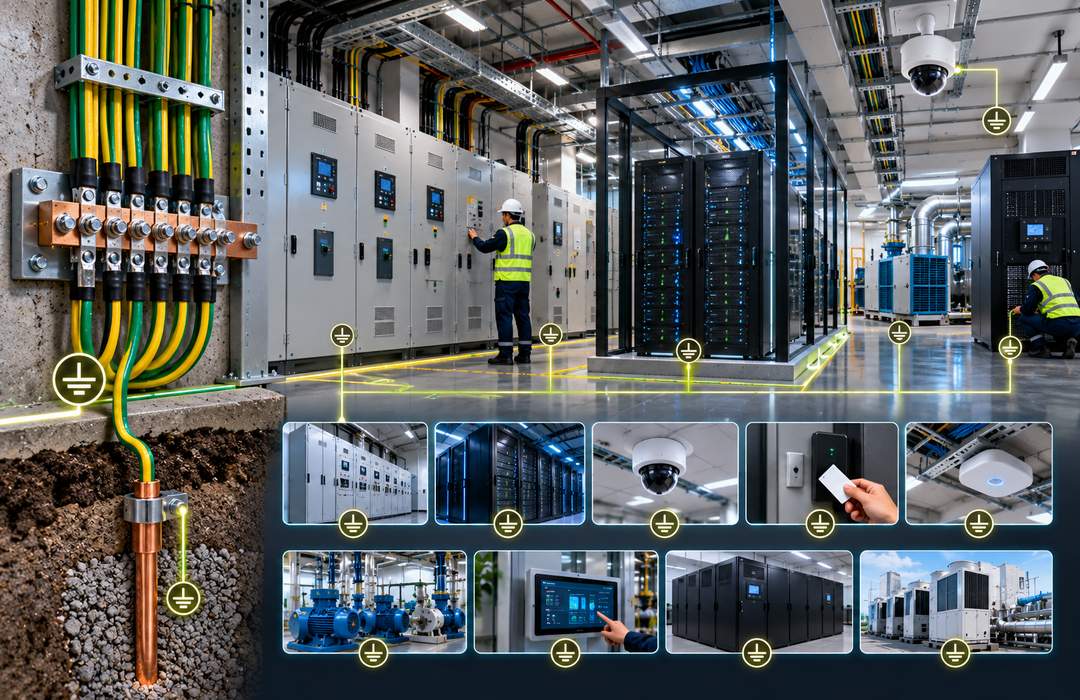
What Are Grounding and Earthing Systems?
Grounding and Earthing Systems Philippines are electrical safety arrangements used to connect selected parts of an electrical installation to earth and to bond conductive parts together so fault currents can follow a controlled path.
These systems form part of the overall electrical protection strategy of a facility. They may include grounding electrodes, grounding conductors, bonding conductors, grounding bars, equipment grounding connections, and other components required by the electrical design.
Grounding and earthing are especially important in commercial buildings, industrial facilities, data centers, offices, equipment rooms, and other environments where electrical and electronic systems must operate safely and reliably.
Foxcon Total Solutions, Inc. provides electrical works and supporting infrastructure services that can help organizations plan and implement grounding arrangements as part of their broader power distribution systems.
Why Choose Grounding and Earthing Systems?
Electrical faults can place unwanted voltage on conductive equipment enclosures, panels, racks, and other exposed metal parts. A properly designed grounding and bonding system helps create a low-impedance fault path so protective devices can respond appropriately when certain electrical faults occur.
Grounding can also help establish a reference point for electrical systems and connected equipment. In facilities containing sensitive electronic systems, grounding should be considered together with power distribution, surge protection, UPS equipment, data center infrastructure, communications equipment, and other connected technologies.
This is particularly relevant for:
-
Electrical panels
-
Servers and network equipment
-
CCTV systems
-
Access control platforms
-
Communication systems
-
Building management systems
-
Industrial machinery
-
Equipment racks
-
UPS and backup power systems
Grounding should not be treated as an isolated component added after installation. It should be coordinated with the complete electrical design from the beginning of the project.
How Grounding and Earthing Systems Work
A grounding system connects designated electrical equipment and conductive parts to an earthing network through suitable conductors and electrodes. When a fault causes an energized conductor to contact a grounded metal enclosure, the grounding and bonding path provides a route for fault current. This fault current can allow the associated protective device to operate according to the electrical design.
Bonding performs a related but different function. It electrically connects conductive parts so dangerous differences in potential can be reduced between them.
A grounding and earthing system may include:
-
Grounding electrodes
-
Grounding electrode conductors
-
Equipment grounding conductors
-
Bonding conductors
-
Grounding bars
-
Busbars
-
Equipment bonding connections
-
Grounding connections for panels and racks
-
Test points where required
The actual configuration depends on the electrical system, site conditions, building construction, equipment requirements, and applicable project standards. Soil conditions can also affect the performance of grounding electrodes, which is why electrode type, quantity, depth, spacing, and installation method should be determined through proper engineering rather than assumption.
Grounding and Earthing Systems Safety & Trust
Grounding is a safety-critical part of an electrical installation. Loose, corroded, damaged, undersized, or incorrectly connected grounding components can reduce the effectiveness of the intended fault-current path. Connections should therefore be properly installed, protected from physical damage, and inspected as part of routine electrical maintenance.
Grounding should also be coordinated with bonding. Simply connecting equipment to earth does not automatically mean that all conductive parts have an effective fault-current path. The relationship between grounding conductors, bonding connections, neutral conductors, protective devices, and the electrical supply arrangement should be understood as part of the complete system.
Only qualified personnel should modify or test grounding systems. Testing and inspection may include continuity checks, bonding verification, grounding electrode resistance measurements, visual inspection, and other project-specific tests.
Foxcon Total Solutions, Inc. supports electrical projects through Engineering and Design, Supply and Installation, Project Implementation, Electrical Testing and Commissioning, Preventive Maintenance, and related technical services.
Grounding and Earthing Systems Tips
-
Plan grounding during electrical design. Do not leave it until equipment installation is almost complete.
-
Coordinate grounding and bonding. Both are important parts of the fault-current path.
-
Use suitable conductors and components. Selection should match the electrical design and environment.
-
Protect connections from corrosion and damage. Poor physical condition can affect performance.
-
Keep grounding points accessible where required. Inspection and testing should be practical.
-
Do not remove bonding connections during equipment changes. Modifications can unintentionally affect system continuity.
-
Review grounding when adding major equipment. New UPS systems, panels, servers, or machinery may introduce additional requirements.
-
Maintain accurate drawings. Record electrodes, grounding bars, conductors, and bonding points.
-
Test according to project requirements. Visual appearance alone does not confirm electrical performance.
-
Investigate unusual electrical behavior carefully. Do not assume grounding is the cause without proper testing.
Check the Complete Fault-Current Path, Not Just the Ground Rod
A common misunderstanding is that grounding quality depends only on the resistance of the ground electrode. The electrode is important, but it is only one part of the overall protection system.
Consider a metal electrical enclosure connected to a grounding conductor. If a fault occurs inside the enclosure, the fault-current path may involve the equipment grounding conductor, bonding connections, panel grounding system, source bonding point, and protective device. A poor connection anywhere along that path can affect how the system behaves.
For this reason, troubleshooting should not focus only on the ground rod or electrode resistance. Technical personnel may also need to verify:
-
Equipment grounding conductor continuity
-
Bonding connections
-
Grounding bar connections
-
Panel termination points
-
Neutral-to-ground relationships
-
Protective device operation
-
Physical condition of grounding components
-
Changes made during previous renovations
The goal is to confirm that the complete grounding and bonding arrangement works as intended, not simply that one individual component produces an acceptable test reading.
Frequently Asked Questions
What is an electrical grounding system?
An electrical grounding system connects designated parts of an electrical installation to earth and provides a reference and fault-current path as part of the facility’s electrical protection arrangement.
What is the difference between grounding and bonding?
Grounding connects selected parts of an electrical system to earth. Bonding electrically connects conductive parts together so unwanted differences in electrical potential can be reduced and fault current can follow a defined path.
Are grounding and earthing the same?
The terms are often used differently depending on region and technical context. In many discussions, both refer to connecting electrical systems or equipment to earth, although specific standards may distinguish terminology and functions.
Why is grounding important for circuit breakers?
During certain faults, an effective grounding and bonding path allows sufficient fault current to flow so the appropriate protective device can operate according to the system design.
Does grounding protect sensitive electronic equipment?
Grounding is an important part of electrical safety and system reference, but it should not be treated as the only form of equipment protection. Surge protection, correct power distribution, UPS systems, bonding, and equipment-specific requirements may also be important.
Should grounding systems be tested?
Yes. Testing may include continuity checks, bonding verification, grounding electrode resistance measurements, and other checks depending on the installation and project requirements.
When should a grounding system be reviewed?
It should be reviewed during new installations, facility expansions, major electrical upgrades, the addition of large equipment, modifications to power distribution, or whenever inspection and testing identify possible problems.
Verify the Entire Grounding and Bonding Path Before Assuming the System Is Protected
Support safer and more reliable electrical infrastructure with properly planned Grounding and Earthing Systems Philippines. From system assessment and electrical design to grounding installation, bonding, testing, commissioning, and preventive maintenance, Foxcon Total Solutions, Inc. can help organizations develop grounding arrangements around actual facility requirements.
📞 Contact us today to discuss your grounding and electrical infrastructure requirements.
📍 Serving businesses in Cebu, Metro Manila, and nationwide.
🌐 Explore Foxcon’s solutions to learn more about our services.
References
1. BYJU’S – Difference Between Earthing and Grounding
https://byjus.com/physics/difference-between-earthing-and-grounding/
2. ELEK – Earthing System Types Explained and Compared
https://elek.com/articles/earthing-system-types-explained-and-compared/
3. Paya Press – Grounding and Earthing System
https://payapress.com/grounding-earthing-system/
4. Maltep – Earthing and Grounding in Building Foundations
https://www.maltep.com/en/content/58-earthing-and-grounding-building-s-foundations
5. LPS France – Difference Between Earthing, Grounding, and Neutral
https://lpsfr.com/en/difference-between-earthing-and-grounding-and-neutral/