


News and Events
Data Center Environmental Control Philippines: Managing Conditions Around Critical IT Infrastructure
What Is Data Center Environmental Control?
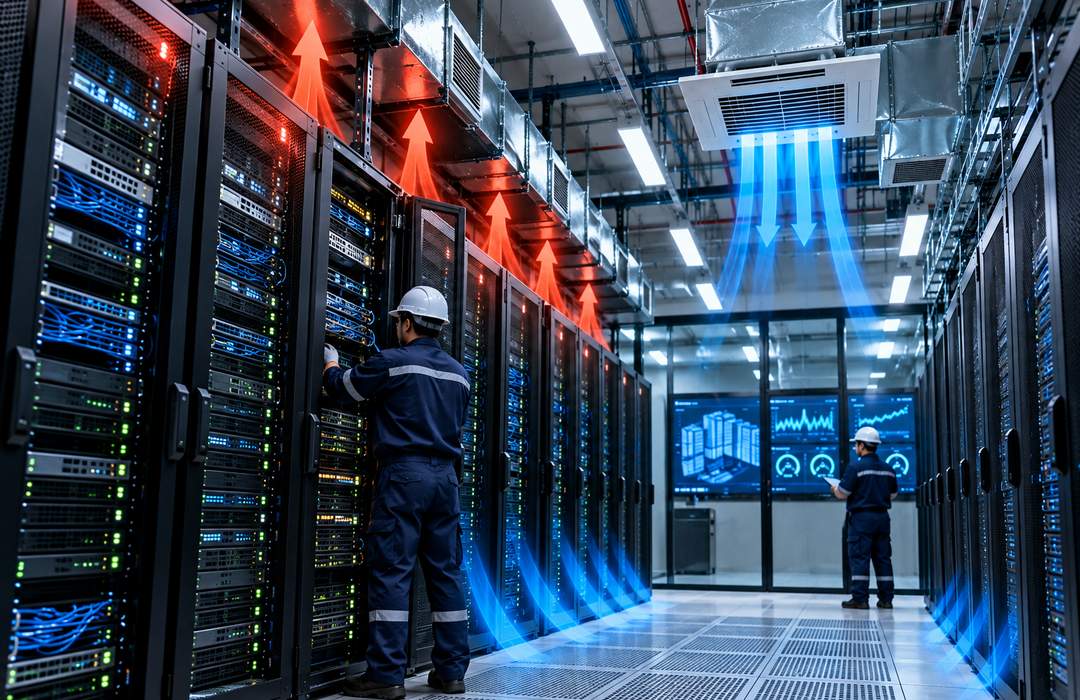
Data Center Environmental Control Philippines refers to the systems and strategies used to maintain suitable operating conditions around servers, network equipment, storage systems, and other critical IT infrastructure. These conditions commonly include temperature, humidity, airflow, and environmental factors that can influence equipment performance and reliability.
Servers, switches, storage devices, and other IT equipment continuously generate heat while operating. Without suitable cooling, airflow management, and environmental monitoring, server rooms and data centers can develop hot spots or unstable conditions that place additional stress on equipment.
Environmental control may combine cooling systems, temperature and humidity sensors, airflow management, monitoring platforms, alarms, and supporting mechanical or electrical infrastructure.
Foxcon Total Solutions, Inc. provides data center, mechanical, electrical, and monitoring solutions that can support controlled operating environments for critical IT systems.
Why Choose Data Center Environmental Control?
Data centers and server rooms often operate continuously, and the amount of heat they generate generally increases as equipment density rises. Maintaining suitable environmental conditions therefore becomes increasingly important as more servers, network devices, and storage systems are installed within the same space.
Data Center Environmental Control Philippines provides facility and IT teams with better visibility into the conditions surrounding critical equipment. Monitoring can help identify rising rack temperatures, humidity concerns, airflow problems, or other changes before they develop into larger operational issues.
Environmental information is especially useful when troubleshooting recurring heat-related concerns. A room-level temperature may appear acceptable while equipment intake temperatures vary significantly between racks or at different heights, which is why monitoring should reflect the actual equipment environment rather than relying on a single wall-mounted reading.
These solutions can work alongside Data Center Cooling Solutions, Environmental Monitoring Systems, Server Rack Solutions, Enterprise Server Solutions, Power Monitoring Systems, and broader Data Center Infrastructure Solutions.
How Data Center Environmental Control Works
Environmental control begins by identifying the operating conditions that need to be maintained and the locations where those conditions should be measured. Sensors may be installed around rack air intakes, equipment zones, cooling paths, or other points where temperature and humidity information can provide meaningful insight into the environment.
Cooling equipment removes heat generated by IT infrastructure, while airflow management helps deliver conditioned air toward equipment intakes and separate it from warmer exhaust air. Depending on the room design, this may involve cooling units, supply and return air paths, rack layout planning, blanking panels, containment strategies, or other airflow-management measures.
Monitoring platforms collect information from compatible sensors and display current conditions through dashboards, reports, or alerts. Where supported, thresholds can be configured so technical personnel are notified when temperature, humidity, or other monitored values move outside predefined operating limits.
The final configuration depends on room size, rack density, equipment heat load, cooling capacity, airflow patterns, redundancy requirements, and the sensitivity of the installed IT systems. Environmental control should therefore be designed around the actual operating environment rather than a fixed room-wide assumption.
Data Center Environmental Control Safety & Trust
Environmental control systems should be coordinated with the electrical and IT infrastructure of the facility because cooling, power, rack placement, cabling, and airflow can affect one another. Adding a high-density rack, for example, may increase both electrical demand and heat output, which can require changes to cooling capacity and airflow distribution.
Sensor placement is equally important. A single temperature measurement near a wall or cooling unit may not represent conditions at equipment intakes, especially in rooms with uneven airflow or concentrated heat loads. Multiple strategically located sensors can provide a more useful picture of what the equipment is actually experiencing.
Cooling units, sensors, monitoring platforms, alarms, and supporting infrastructure should also be inspected and maintained regularly. Incorrect sensor readings, failed cooling components, blocked airflow, or poorly configured alerts can reduce the usefulness of the environmental control strategy.
Foxcon Total Solutions, Inc. supports infrastructure projects for Mechanical and Electrical Works through Engineering and Design, Supply and Installation, Project Implementation, Testing and Commissioning, Preventive Maintenance, and related technical services.
Data Center Environmental Control Tips
-
Monitor conditions near equipment, not only at room level. Rack intake temperatures can differ from the average room temperature.
-
Place sensors strategically. Use locations that reflect actual operating conditions around critical equipment.
-
Maintain clear airflow paths. Avoid blocking server intakes or exhaust areas with cables, boxes, or unused equipment.
-
Review cooling capacity before adding major IT loads. More equipment means more heat that must be removed.
-
Use blanking panels where appropriate. Empty rack spaces can allow unwanted air recirculation.
-
Configure meaningful alerts. Set thresholds that help technical teams respond before conditions become critical.
-
Inspect cooling and monitoring equipment regularly. Preventive maintenance helps preserve reliable operation.
-
Review environmental data over time. Trends can reveal gradual changes that may not be obvious from a single reading.
Measure Conditions at the Rack Intake, Not Just at the Wall
One of the most common environmental monitoring mistakes is assuming that a room-level temperature represents the condition experienced by every server. In reality, airflow patterns can create significant differences between racks, between the bottom and top of a rack, and between equipment intake and exhaust areas.
Sensors placed near server air intakes provide information that is more directly related to the conditions entering the equipment. If intake temperatures begin rising in one area while the rest of the room remains stable, the issue may involve airflow distribution, blocked ventilation, recirculation, rack density, or insufficient local cooling rather than an overall cooling failure.
Monitoring multiple rack locations can also help technical teams identify hot spots before they become more serious. This is particularly important when equipment is added, racks are rearranged, cooling settings are changed, or airflow pathways are modified.
The goal is not simply to maintain a comfortable room temperature. Environmental control should verify that the air actually reaching critical IT equipment remains within the intended operating conditions.
Frequently Asked Questions
What is Data Center Environmental Control?
Data Center Environmental Control is the management and monitoring of environmental conditions such as temperature, humidity, airflow, and related factors around servers and other critical IT equipment.
Why is temperature control important in data centers?
Servers and network equipment continuously generate heat. Suitable temperature control helps maintain operating conditions that support equipment reliability and stable performance.
What environmental conditions can be monitored?
Depending on the installed system, monitoring may include temperature, relative humidity, airflow conditions, water-leak detection, and other environmental parameters relevant to the facility.
Is environmental monitoring the same as data center cooling?
No. Cooling systems actively remove heat and manage room conditions, while environmental monitoring measures those conditions and provides information to facility teams. The two systems work together as part of a broader environmental control strategy.
Where should environmental sensors be installed?
Sensor locations depend on the room and rack layout. Useful locations may include equipment air intakes, different rack heights, hot-aisle areas, cooling paths, and other points where environmental conditions need to be observed.
Can one room temperature sensor be enough?
For very small and simple environments, it may provide basic information, but larger or denser server rooms usually benefit from multiple sensors because conditions can vary significantly between different parts of the room.
When should cooling capacity be reviewed?
Cooling capacity should be reviewed when adding major IT equipment, increasing rack density, modifying cooling systems, changing room layouts, or identifying recurring temperature problems.
Should environmental alerts be tested?
Yes. Alarm thresholds, notifications, and escalation procedures should be tested periodically so technical personnel know that they will receive reliable information when conditions move outside acceptable limits.
Control the Environment Around the Equipment, Not Just the Room
A properly planned Data Center Environmental Control Philippines strategy should focus on the conditions experienced by critical IT equipment rather than only on the average room temperature. Cooling capacity, airflow management, rack layout, sensor placement, monitoring, and alerts should all be coordinated around the actual equipment load and operating environment.
Foxcon Total Solutions, Inc. can support data center environmental planning, cooling infrastructure, monitoring systems, mechanical and electrical works, installation, testing, commissioning, and preventive maintenance for critical IT environments.
📞 Contact us today to discuss your data center environmental control requirements.
📍 Serving businesses in Cebu, Metro Manila, and nationwide.
🌐 Explore Foxcon’s solutions to learn more about our services.
References
-
Axis Communications – Data Center Solutions
https://www.apac-comms.axis.com/en/data-center-solutions -
Sunbird – Data Center Environment Monitoring
https://www.sunbirddcim.com/glossary/data-center-environment-monitoring -
Vaisala – Data Center Environmental Measurement
https://www.vaisala.com/en/industries-applications/hvac-measurement/data-centers -
Dataspan – Data Center Environmental Standards
https://dataspan.com/blog/data-center-environmental-standards/ -
Nlyte – Why Data Center Environmental Monitoring Is Important
https://www.nlyte.com/faqs/why-is-data-center-environmental-monitoring-important/